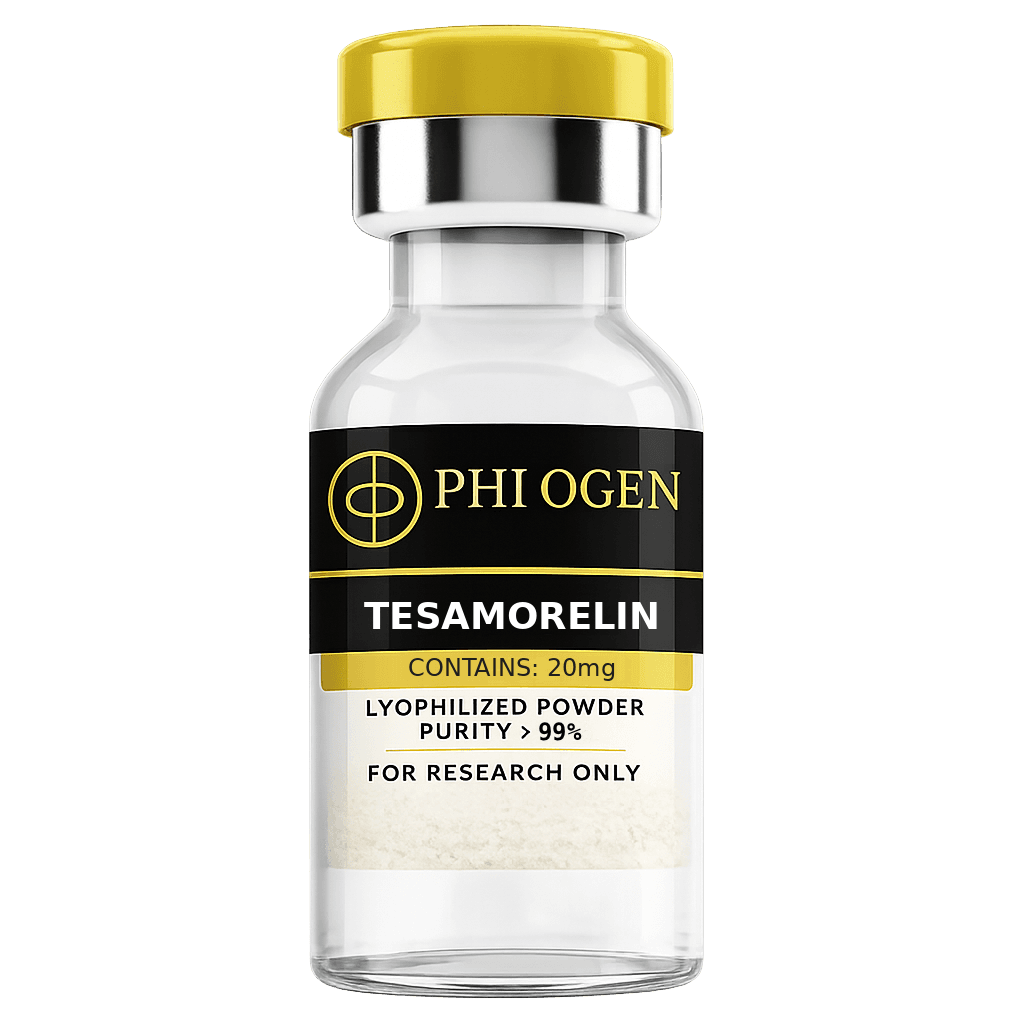
Tesamorelin 20mg
Studied for growth-axis and performance research.
Tesamorelin is a stabilized GHRH (1-44) analog studied for its effects on the growth-hormone axis and visceral-adiposity endpoints. It is one of the most clinically documented GHRH analogs in the research literature.
Proposed mechanism
Tesamorelin binds the GHRH receptor in the anterior pituitary, stimulating endogenous growth-hormone release. The compound is engineered for improved stability over native GHRH, supporting daily-dose research protocols.
Research highlights
- Stabilized GHRH (1-44) analog
- Known pharmaceutically as Egrifta
- Studied in visceral-fat and GH-axis research
- Daily-dose research profile
Research protocol notes
Reconstitute under sterile technique with bacteriostatic water. Typical volumes range from 1–3 mL depending on the target working concentration. Swirl gently — do not shake — to avoid peptide shearing.
Stacking and comparative studies
Tesamorelin + ipamorelin is a dual-pathway GH stack (GHRH analog + ghrelin agonist). Pre-blended IPA/TESA research blends are available.
Handling and storage
Lyophilized powder is stable at ambient shipping temperatures. Once reconstituted with bacteriostatic water, store at 2–8 °C and use within 28 days. For long-term storage of unreconstituted vials, freeze at −20 °C and protect from light.
Frequently asked
Is tesamorelin the same as Egrifta?
Egrifta is the pharmaceutical formulation of tesamorelin. Research material sold here is for laboratory use only.
How does it differ from CJC-1295?
Both are GHRH analogs. Tesamorelin is closer to native GHRH structurally; CJC-1295 "with DAC" uses an albumin-binding modification for extended half-life.
Why stack with ipamorelin?
GHRH analog + ghrelin agonist research stacks target two receptors for amplified GH release.
Daily or weekly dosing?
Daily dosing is standard in the tesamorelin research literature.