
Popular Peptide Stacks Explained
Most research-peptide work pairs compounds that hit different arms of the same system. Here's a breakdown of the combinations that keep appearing in the literature and why they make sense.
Why stack peptides at all?
Biological systems rarely run on a single signal. Growth hormone release uses two receptors. Satiety runs through multiple hormone pathways. Tissue repair involves angiogenesis plus cell migration plus immune modulation. Stacking peptides that target complementary mechanisms produces stronger or broader endpoints than any single compound alone — which is why the same combinations keep appearing across independent research groups.
Repair stack: BPC-157 + TB-500
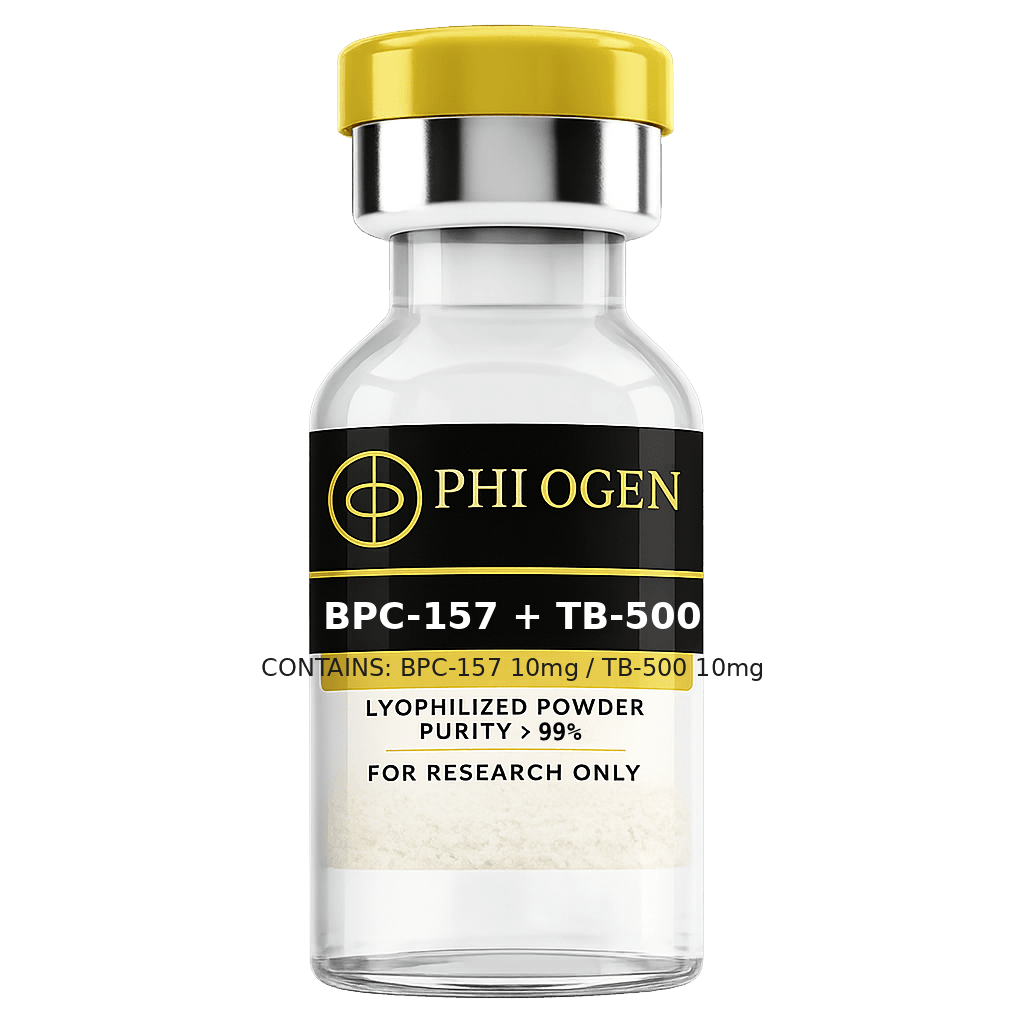
The canonical soft-tissue repair combination. BPC-157 drives angiogenesis via VEGFR2. TB-500 drives cellular migration via actin sequestration. Different arms of the same process. Available pre-blended at 10 mg and 20 mg total mass.
- BPC-157 + TB-500 10 mg (5 mg + 5 mg)
- BPC-157 + TB-500 20 mg (10 mg + 10 mg)
Growth-axis stack: Ipamorelin + CJC-1295
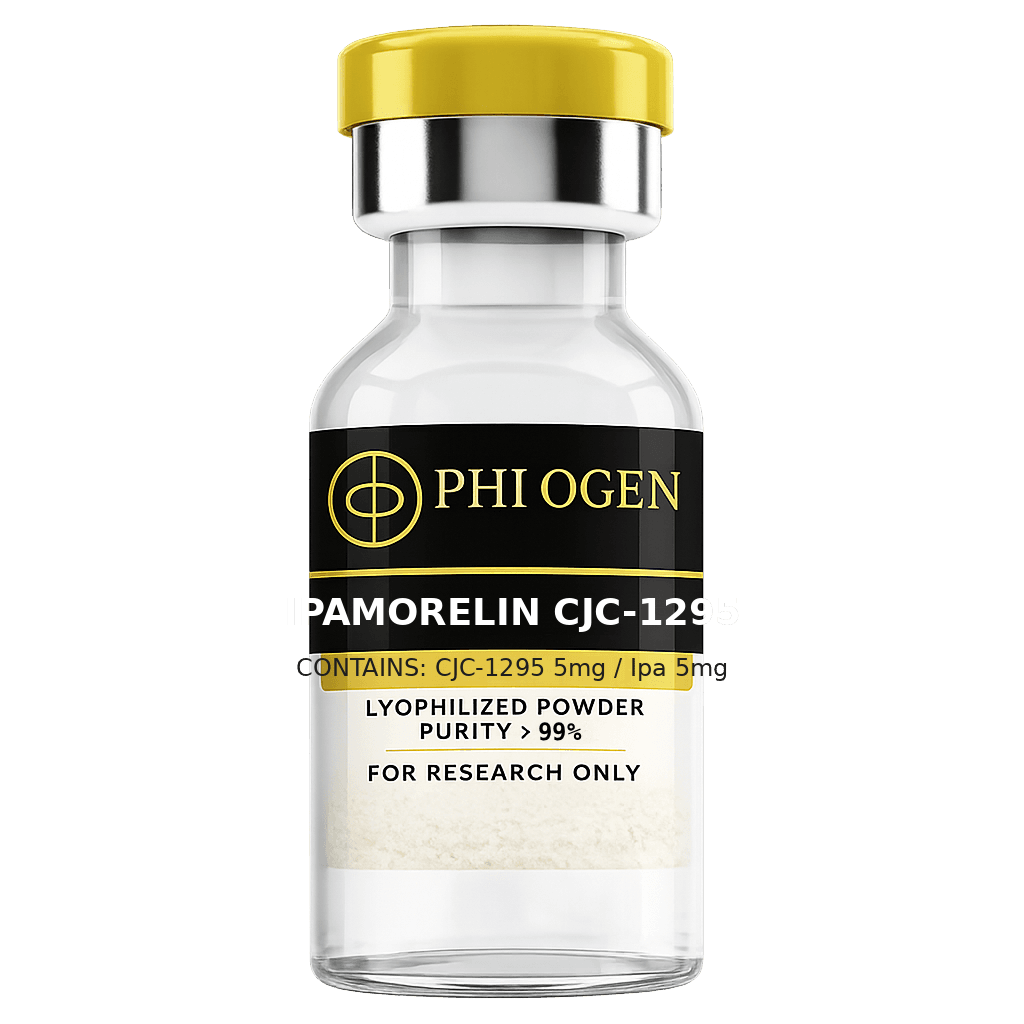
Ipamorelin activates the ghrelin receptor. CJC-1295 activates the GHRH receptor. Both drive growth-hormone release from the pituitary, but through different signaling cascades. Activating both at once produces a larger GH pulse than either alone. This is the most-published growth-axis stack in the research literature.
Pre-blended versions use the No DAC variant of CJC-1295 so both compounds have short half-lives and can pulse together — mimicking natural GH release rhythms.
Alternative growth-axis: Ipamorelin + Tesamorelin
Same principle, different GHRH analog. Tesamorelin is closer to native GHRH structurally than CJC-1295. Researchers who prefer a more "natural" GHRH-analog profile use this stack instead. Available in two pre-blended ratios:
- IPA 3 mg + TESA 10 mg
- IPA 5 mg + TESA 10 mg
Metabolic stack: Cagri-Sema
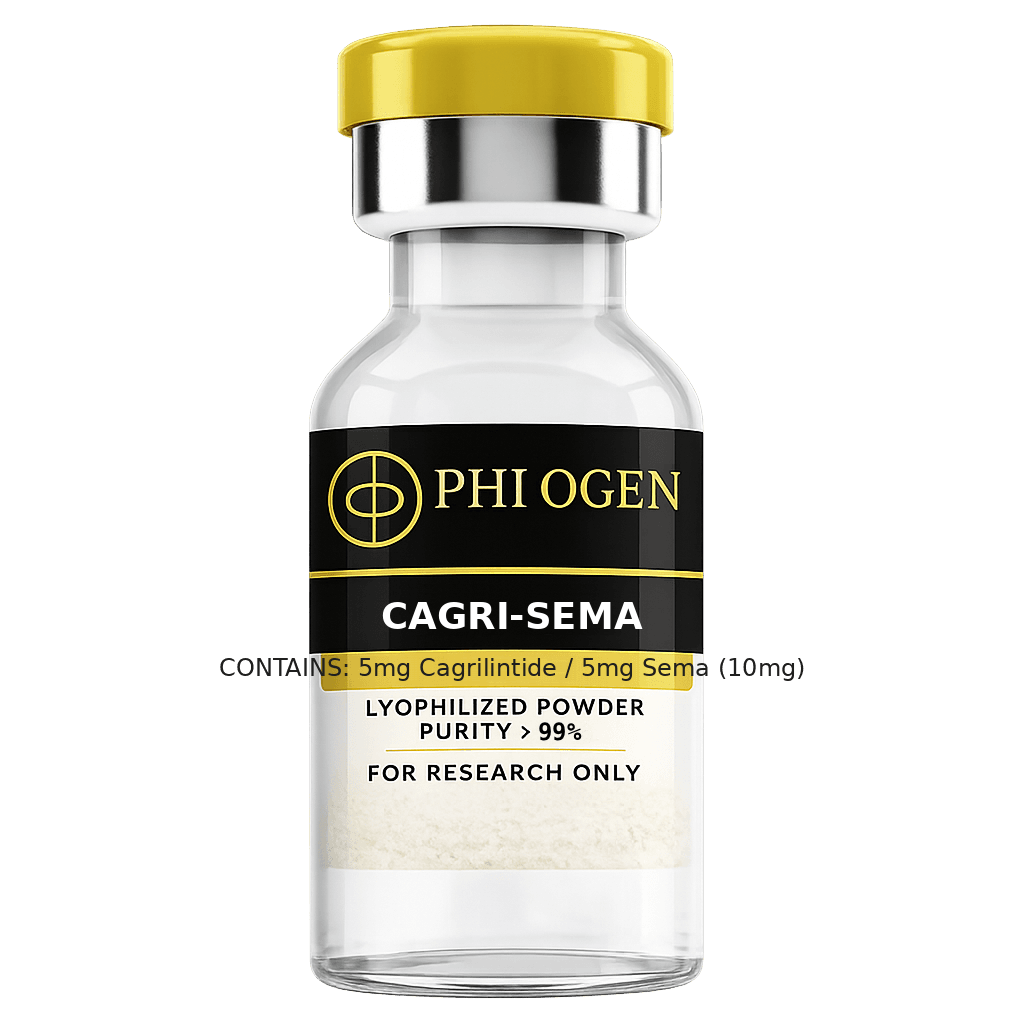
Cagrilintide + semaglutide. Amylin pathway + GLP-1 pathway. Cagrilintide is a long-acting amylin analog that engages satiety and gastric-emptying circuits distinct from GLP-1. Combining the two produces additive metabolic endpoints — and the pre-blend eliminates the need to reconstitute two separate vials.
Advanced metabolic stack: Cagri-Reta
Cagrilintide + retatrutide. Amylin + GLP-1 + GIP + glucagon. Four-receptor coverage across the entire incretin and satiety landscape. This is the most aggressive metabolic research stack currently available as a pre-blend. Two ratio options:
- Cagri-Reta 5 mg / 5 mg
- Cagri-Reta 10 mg variant
Cosmetic / repair stack: GLOW and KLOW
GLOW
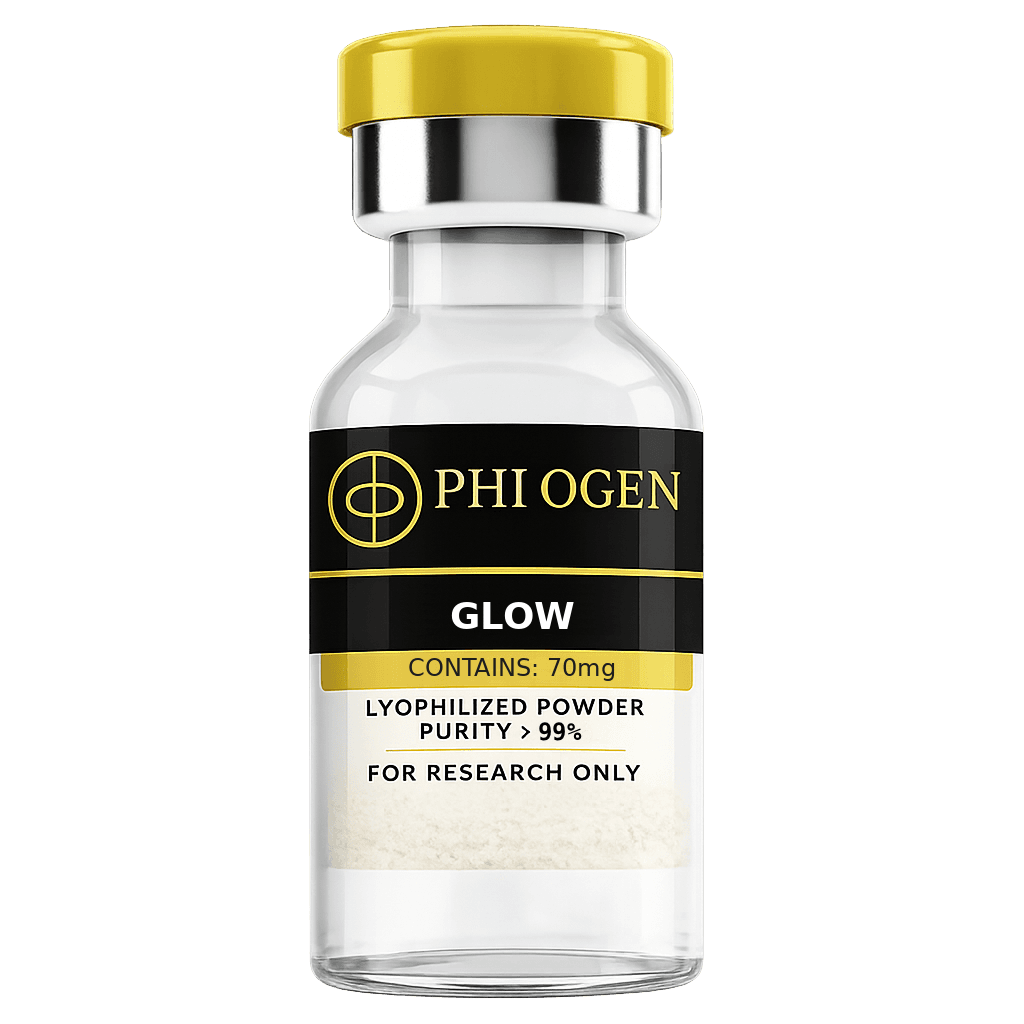
GHK-Cu plus repair peptides (typically BPC-157 and TB-500 variants). Targets collagen synthesis, vascular signaling, and cellular migration all at once — the three arms of skin and soft-tissue remodeling. Available in 50 mg and 70 mg total-mass formats.
KLOW
GLOW plus KPV — the α-MSH-derived anti-inflammatory tripeptide. Adds an inflammation-modulation layer to the cosmetic/repair stack. 80 mg total-mass format.
Mitochondrial support stack
Not pre-blended, but commonly run together in longevity research:
- MOTS-c — mitochondrial-derived peptide, AMPK modulation.
- SS-31 — cardiolipin-binding, inner mitochondrial membrane support.
- NAD+ — sirtuin and PARP substrate.
Each compound targets a different part of mitochondrial biology. Researchers studying mitochondrial dysfunction models often run all three in parallel.
Cognitive stack (DIY)
No pre-blended cognitive stacks exist in the current catalogue, but common parallel combinations include:
- Selank + Semax — anxiolytic + nootropic, covering both axes.
- DSIP + Pinealon — sleep modulation + pineal-axis bioregulator.
Why pre-blended vs DIY?
Pre-blended vials save reconstitution time, lock in a fixed ratio, and reduce injection volume (one vial instead of two). They're the right choice when the canonical ratio matches your research design. DIY — buying separate vials and combining them — is the right choice when you need ratio flexibility, or when you want to add or remove one component mid-protocol.
Stack design principles
- Complementary mechanisms, not redundant ones. Stacking two GLP-1 agonists adds nothing. Stacking GLP-1 + amylin adds a new pathway.
- Match half-lives. Short-acting + short-acting, or long-acting + long-acting. Mixing produces unpredictable timing.
- Introduce one variable at a time. Adding three compounds simultaneously makes it impossible to attribute any observed endpoint to a specific one.
Research-use notice
Every stack and compound on Tidemaxxing is sold for laboratory research only. Nothing on this page is medical advice.
Featured compounds
Related reading
Every compound referenced on this page is indexed in the catalogue with per-batch COAs and direct purchase links.
Open the catalogue →