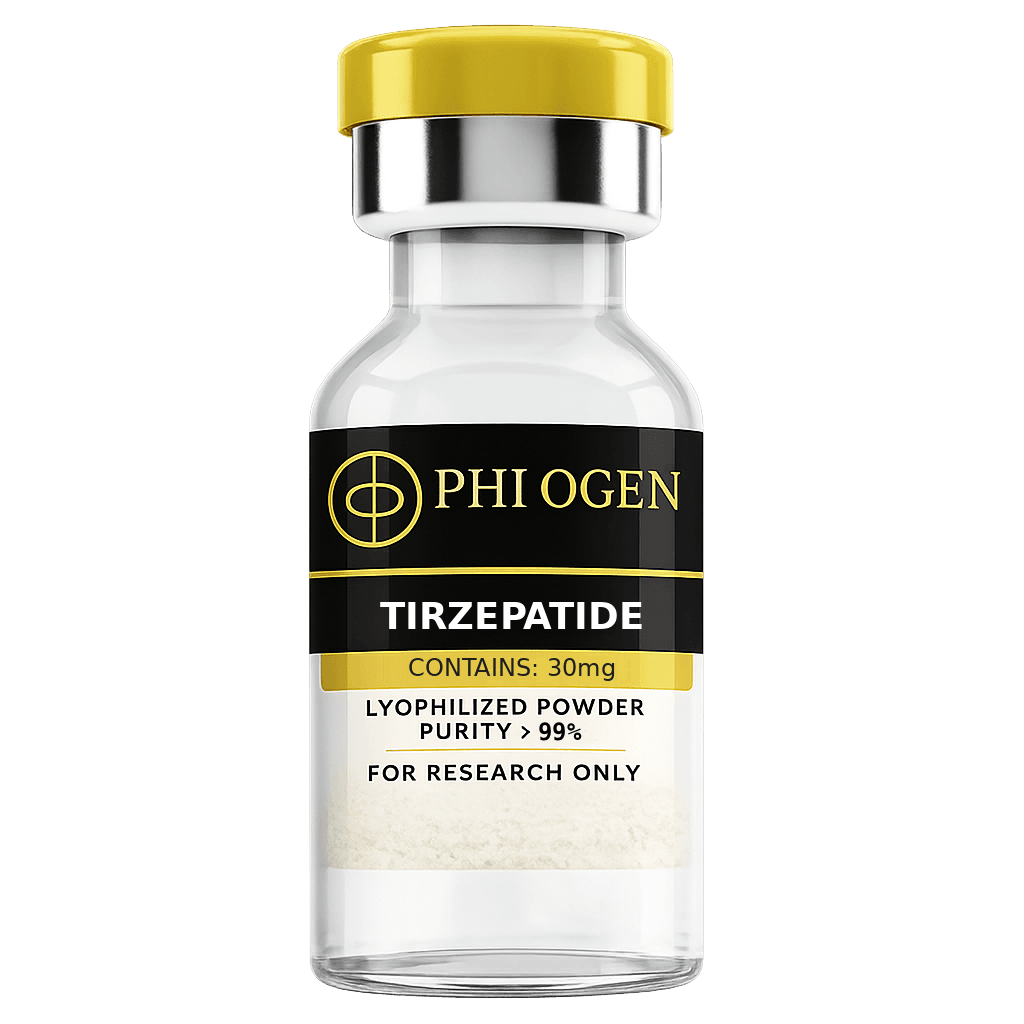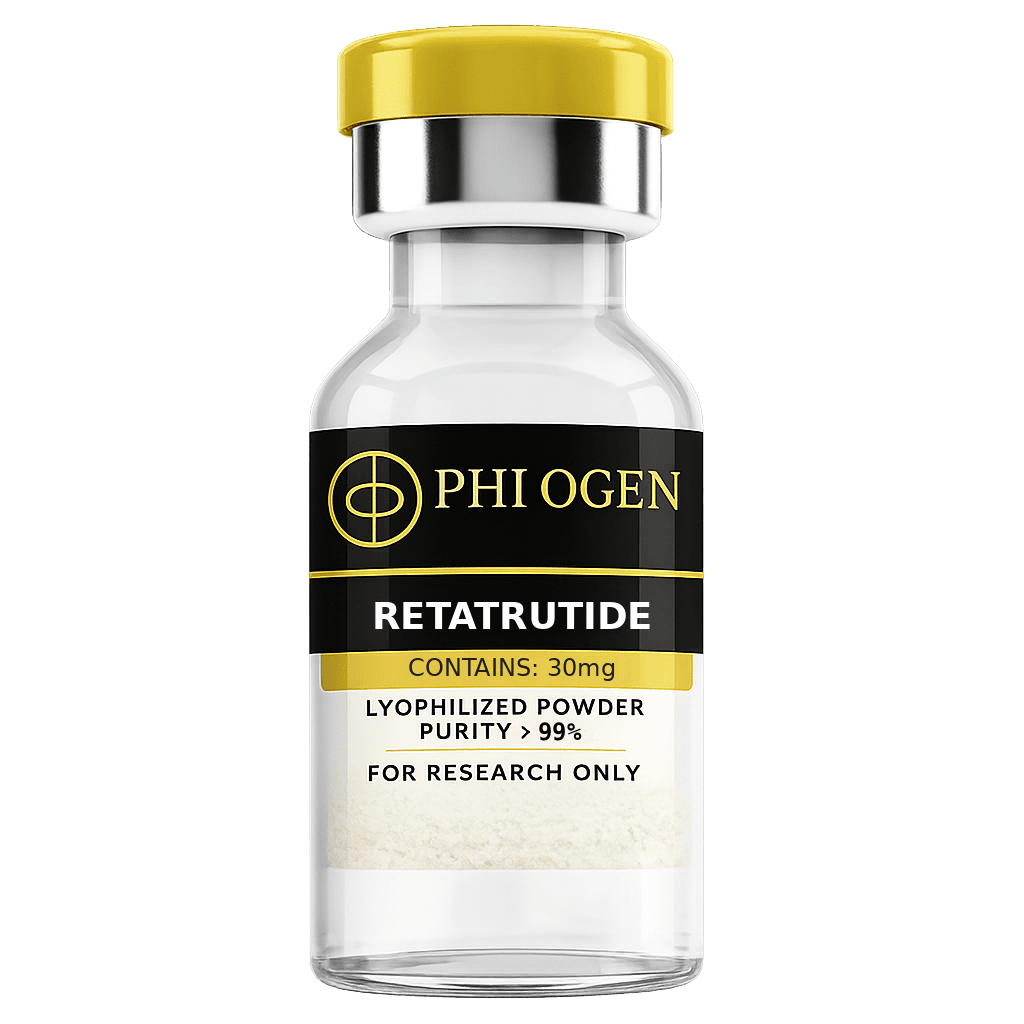
Retatrutide 30mg
Metabolic support for body recomposition research.
Retatrutide is a triple agonist targeting the GLP-1, GIP, and glucagon receptors — the broadest incretin/counterregulatory activation profile studied in peptide research to date. It is frequently benchmarked in the literature against dual agonists like tirzepatide and pure GLP-1 agonists like semaglutide.
Proposed mechanism
By recruiting glucagon-receptor signaling alongside the two incretin receptors, retatrutide is proposed to add an energy-expenditure component on top of the appetite-suppression and insulinotropic effects typical of GLP-1/GIP activation. This triple-agonist design is the current frontier of peptide metabolic research.
Research highlights
- Triple agonist: GLP-1 + GIP + glucagon receptor
- Available in 10, 15, 20, and 30 mg research vials
- Among the most-discussed new research compounds in metabolic studies
- Studied head-to-head with tirzepatide in comparative protocols
Research protocol notes
Weekly-dosing protocols dominate the research literature. Reconstitution in BAC water with careful aliquoting is standard. Lower starting concentrations are typical during titration phases.
Stacking and comparative studies
Reta-Cagri (retatrutide + cagrilintide) blends appear in comparative amylin-co-agonism research. Retatrutide is rarely stacked with other GLP-1 compounds.
Handling and storage
Lyophilized powder is stable at ambient shipping temperatures. Once reconstituted with bacteriostatic water, store at 2–8 °C and use within 28 days. For long-term storage of unreconstituted vials, freeze at −20 °C and protect from light.
Frequently asked
Why is retatrutide called a "triple agonist"?
It activates three distinct receptors — GLP-1, GIP, and glucagon — rather than one (semaglutide) or two (tirzepatide).
Is retatrutide more potent than tirzepatide in research models?
Published comparisons report stronger endpoints in some metabolic models, though the full picture is still being characterized in ongoing studies.
What is the typical half-life in research?
Weekly dosing schedules are standard, consistent with a multi-day pharmacokinetic profile.
How should multiple vial sizes be chosen?
Match total study duration × weekly concentration to choose the most cost-efficient vial size.