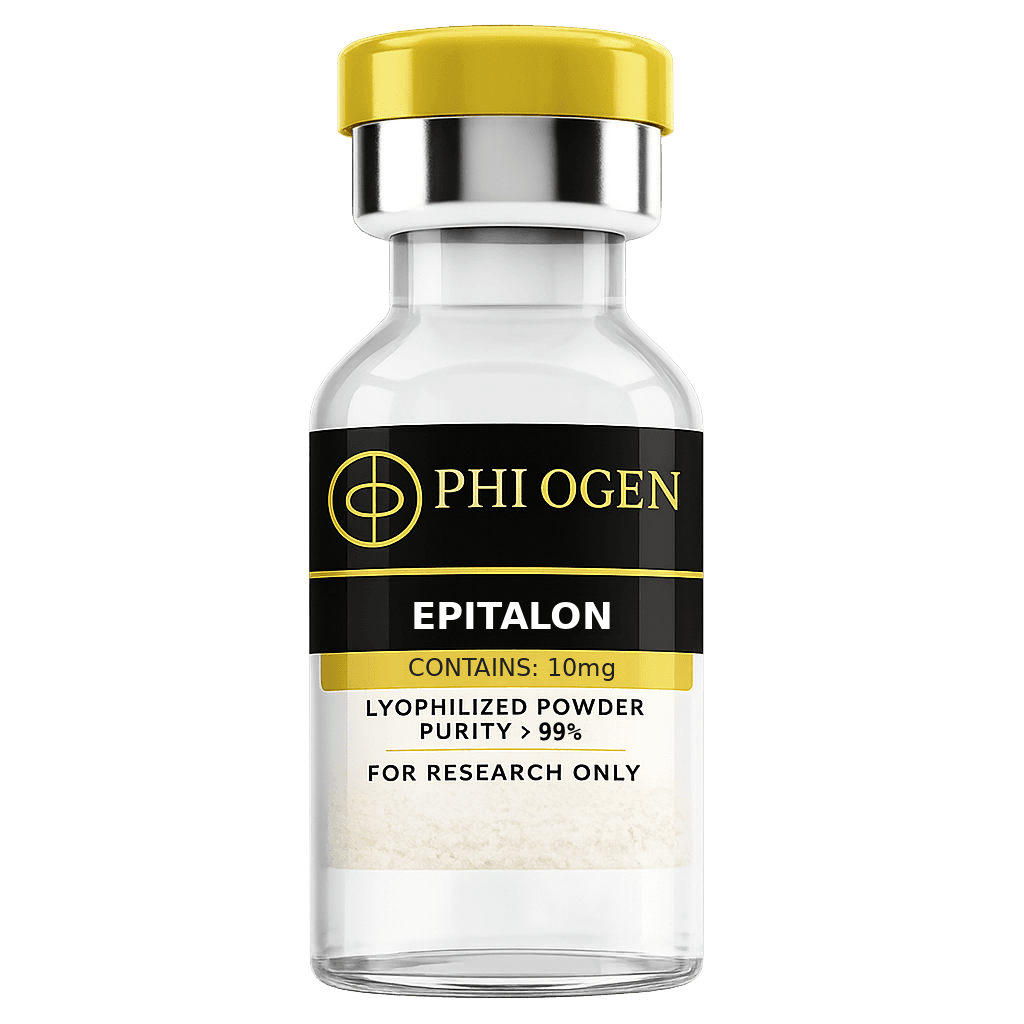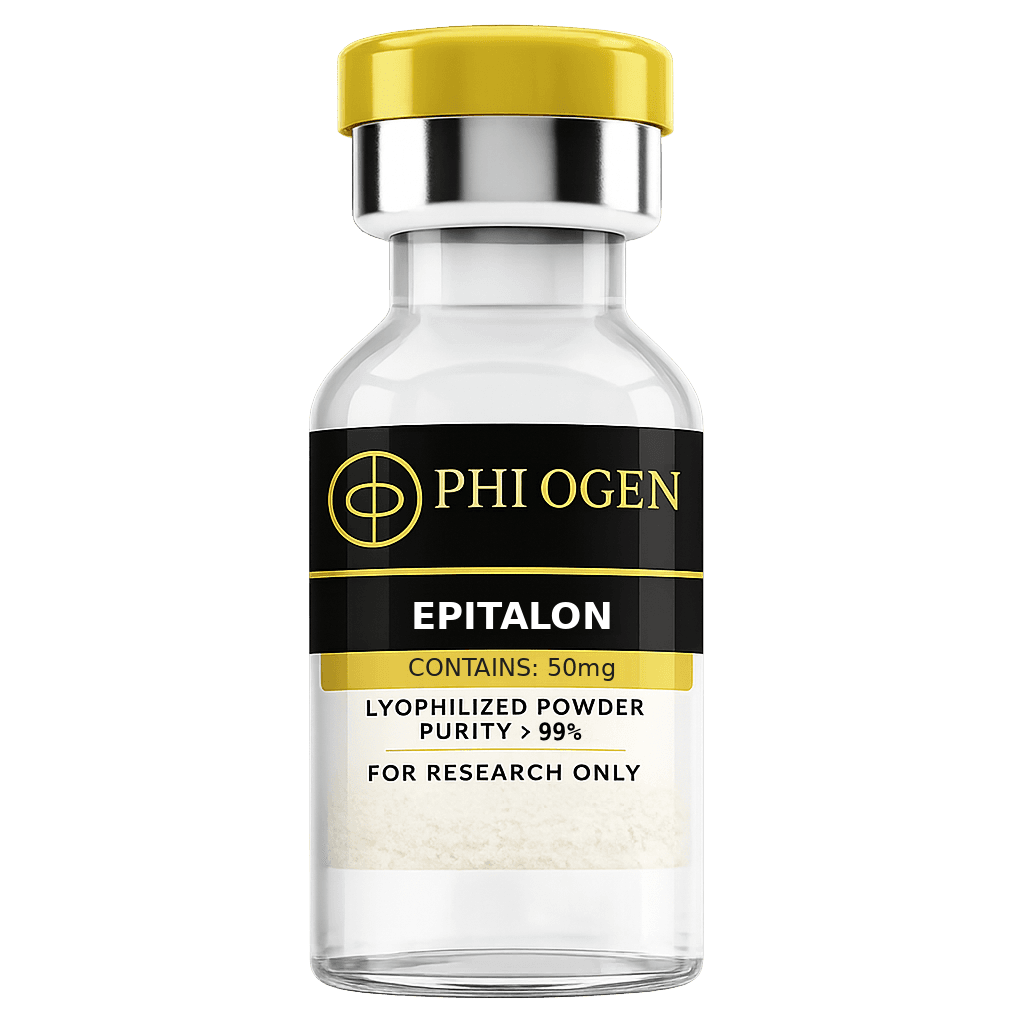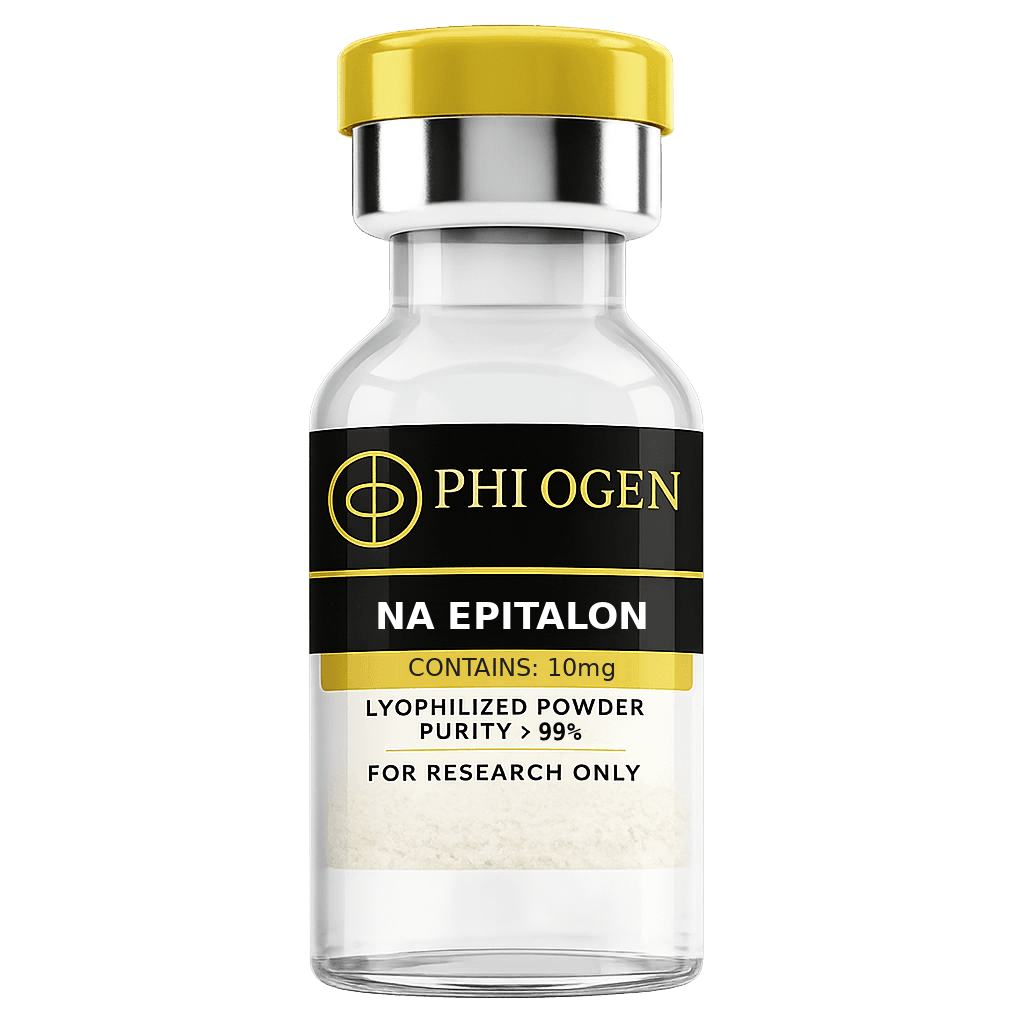
NA-Epitalon 10mg
Compounds used in longevity and anti-senescence research.
Epitalon (Epithalon) is a synthetic tetrapeptide (Ala-Glu-Asp-Gly) developed from pineal-gland extracts. It is one of the most studied peptides in telomere-biology and circadian-regulation research, with a multi-decade literature primarily from Russian and Eastern European groups.
Proposed mechanism
Research describes epitalon as a telomerase-activating peptide — upregulating telomerase reverse transcriptase (TERT) expression in somatic cells. It is also reported to normalize melatonin rhythms and modulate pineal-axis function in aging models.
Research highlights
- Tetrapeptide: Ala-Glu-Asp-Gly
- Studied in telomere-biology, circadian, and longevity research
- Developed by Prof. Khavinson at the St. Petersburg Institute of Bioregulation
- Available in 10 mg and 50 mg research vials
Research protocol notes
Both injectable and intranasal research routes appear in the literature. Short courses (10–20 days) are more common than continuous protocols.
Stacking and comparative studies
Epitalon is commonly studied alongside Pinealon and other short bioregulator peptides from the Khavinson series.
Handling and storage
Lyophilized powder is stable at ambient shipping temperatures. Once reconstituted with bacteriostatic water, store at 2–8 °C and use within 28 days. For long-term storage of unreconstituted vials, freeze at −20 °C and protect from light.
Frequently asked
Is Epitalon the same as Epithalon?
Yes — two transliterations of the same Russian-developed tetrapeptide.
What is NA-Epitalon?
N-acetylated Epitalon — a modified form with improved stability profile in some research protocols.
How long are research courses typically run?
Short pulsed courses (10–20 days, 1–2× annually in animal models) dominate the literature, not continuous dosing.
What is telomerase activation?
Upregulation of the enzyme that extends telomeres at chromosome ends — a central mechanism studied in cellular aging.