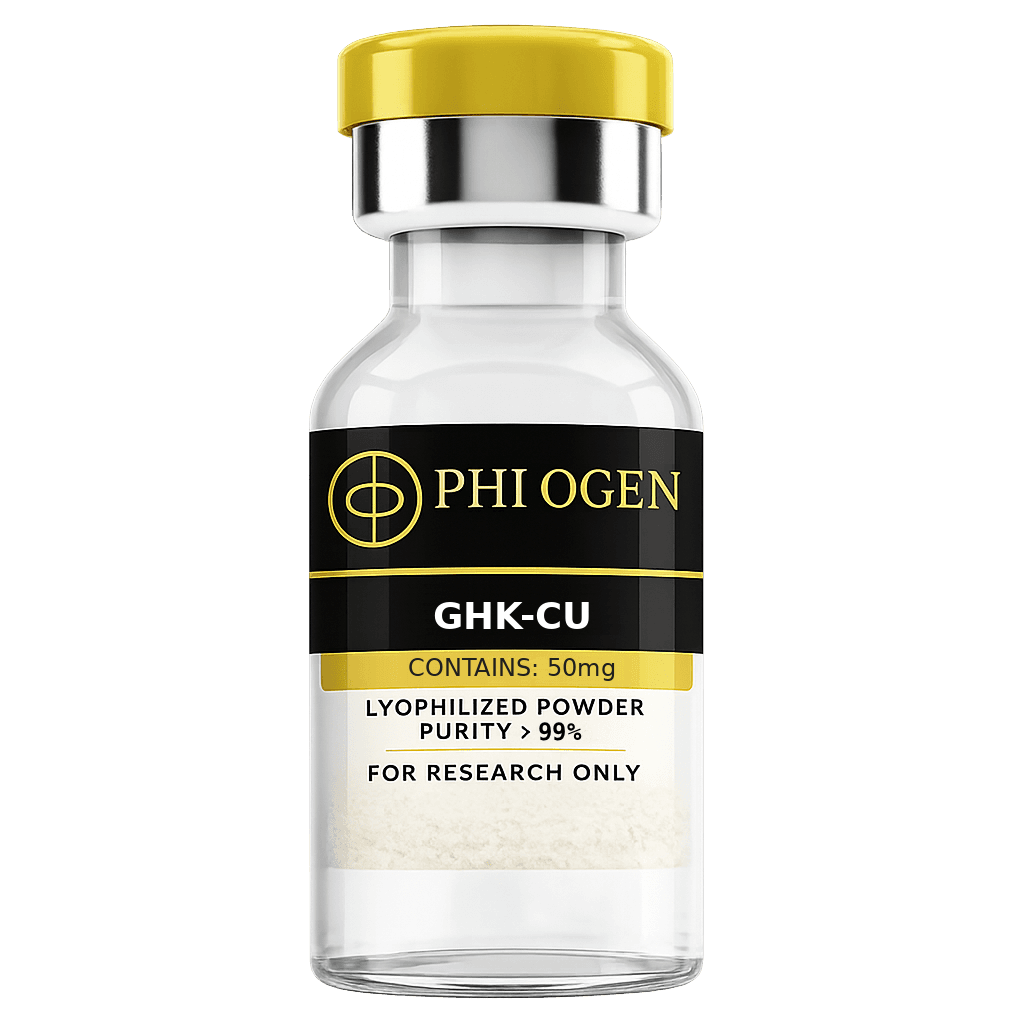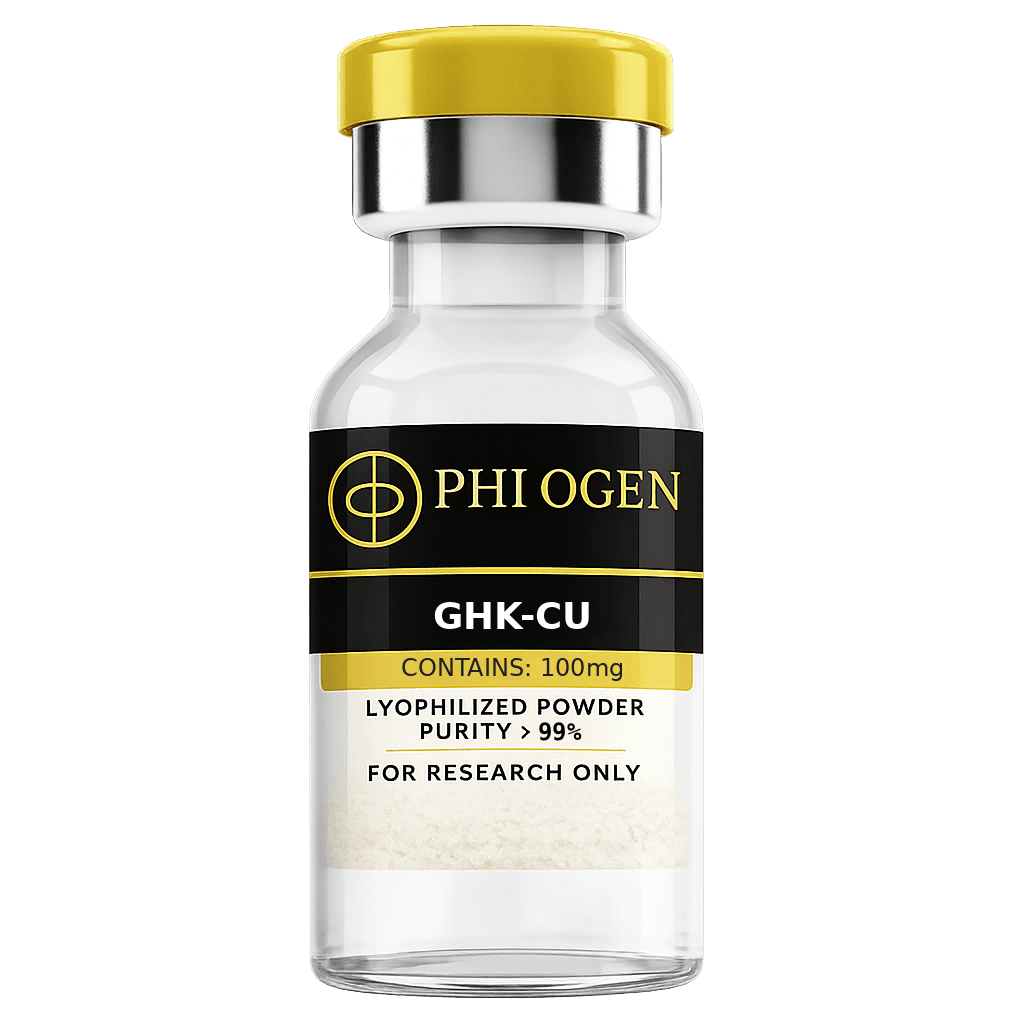
GHK-Cu 100mg
Compounds used in longevity and anti-senescence research.
GHK-Cu (copper tripeptide-1) is a naturally occurring peptide that binds copper ions to form a biologically active complex. It is one of the longest-studied peptides in skin, hair-follicle, and wound-healing research, with a literature dating back to the 1970s.
Proposed mechanism
The peptide-copper complex modulates expression of genes involved in collagen synthesis, extracellular-matrix remodeling, and antioxidant response. In skin research, GHK-Cu has been shown to upregulate elastin, glycosaminoglycans, and decorin while suppressing markers of senescence.
Research highlights
- One of the most extensively studied cosmetic and repair peptides
- Research spans skin, hair-follicle, bone, and vascular models
- Dual role as signaling peptide and copper carrier
- Frequently used in topical research formulations
Research protocol notes
Both injectable and topical research protocols appear in the literature. For topical formulations, the peptide is typically prepared in a non-reactive vehicle at 0.1–2% depending on the study.
Stacking and comparative studies
GLOW and KLOW blends (containing GHK-Cu alongside BPC-157, TB-500, and related peptides) are pre-mixed research formulations for multi-peptide repair and cosmetic studies.
Handling and storage
Lyophilized powder is stable at ambient shipping temperatures. Once reconstituted with bacteriostatic water, store at 2–8 °C and use within 28 days. For long-term storage of unreconstituted vials, freeze at −20 °C and protect from light.
Frequently asked
Why is it called "copper peptide"?
GHK has high affinity for Cu(II) ions. The peptide binds copper at physiological concentrations to form the biologically active complex.
What is the difference between 50 mg and 100 mg vials?
Same compound, different total mass — 100 mg is typically used for longer or higher-concentration research designs.
Is GHK-Cu studied topically or systemically?
Both. Topical research dominates the cosmetic literature; systemic models appear in wound-healing and anti-senescence studies.
What are GLOW and KLOW blends?
Pre-mixed multi-peptide research blends built around GHK-Cu plus repair peptides like BPC-157 and TB-500.