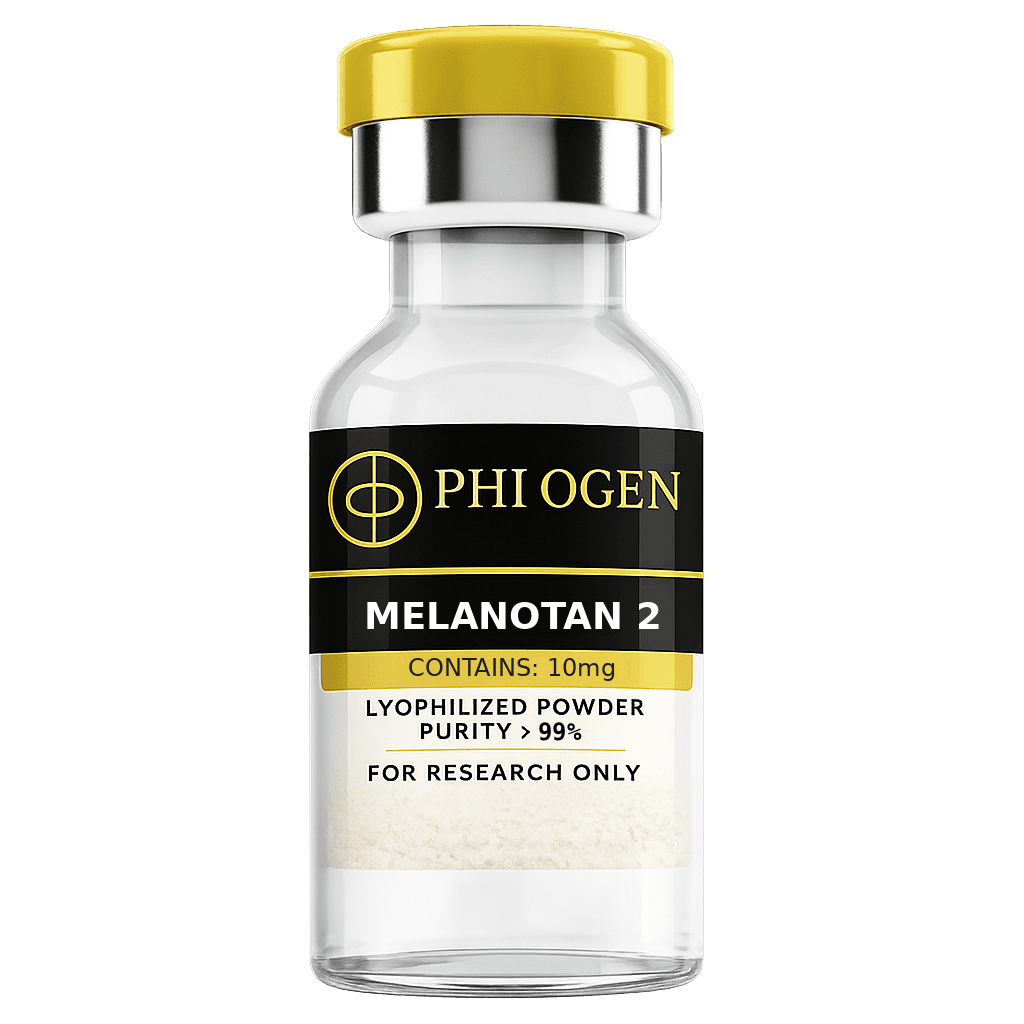
Melanotan II 10mg
Compounds used in longevity and anti-senescence research.
Melanotan II is a synthetic cyclic heptapeptide α-MSH analog with broad melanocortin-receptor activity (MC1R, MC3R, MC4R, MC5R). Its wide receptor profile is why it shows up across pigmentation, appetite, and sexual-response research.
Proposed mechanism
By activating multiple melanocortin receptors, Melanotan II produces a broader endpoint profile than more selective analogs. MC1R activation drives pigmentation; MC4R activation engages central appetite and sexual-response circuits.
Research highlights
- Broad-spectrum melanocortin agonist
- Cyclic heptapeptide structure for improved stability
- Studied in pigmentation, appetite, and CNS-response models
- Parent compound to the more selective PT-141
Research protocol notes
Reconstitute under sterile technique with bacteriostatic water. Typical volumes range from 1–3 mL depending on the target working concentration. Swirl gently — do not shake — to avoid peptide shearing.
Stacking and comparative studies
Typically studied alone.
Handling and storage
Lyophilized powder is stable at ambient shipping temperatures. Once reconstituted with bacteriostatic water, store at 2–8 °C and use within 28 days. For long-term storage of unreconstituted vials, freeze at −20 °C and protect from light.
Frequently asked
Why is Melanotan II broader than PT-141?
PT-141 is MC4R-selective. Melanotan II activates MC1R, MC3R, MC4R, and MC5R — which is why its research endpoints span pigmentation, appetite, and sexual response.
How does it differ from Melanotan I?
MT1 is more MC1R-focused. MT2 is broader-spectrum. Research selection depends on which receptor profile the study requires.
Is MT2 still studied?
Yes — it remains a benchmark in melanocortin-pathway research despite newer, more selective analogs.
What are common research concerns?
Broad receptor activation produces multiple endpoints simultaneously — researchers design protocols to isolate specific effects.