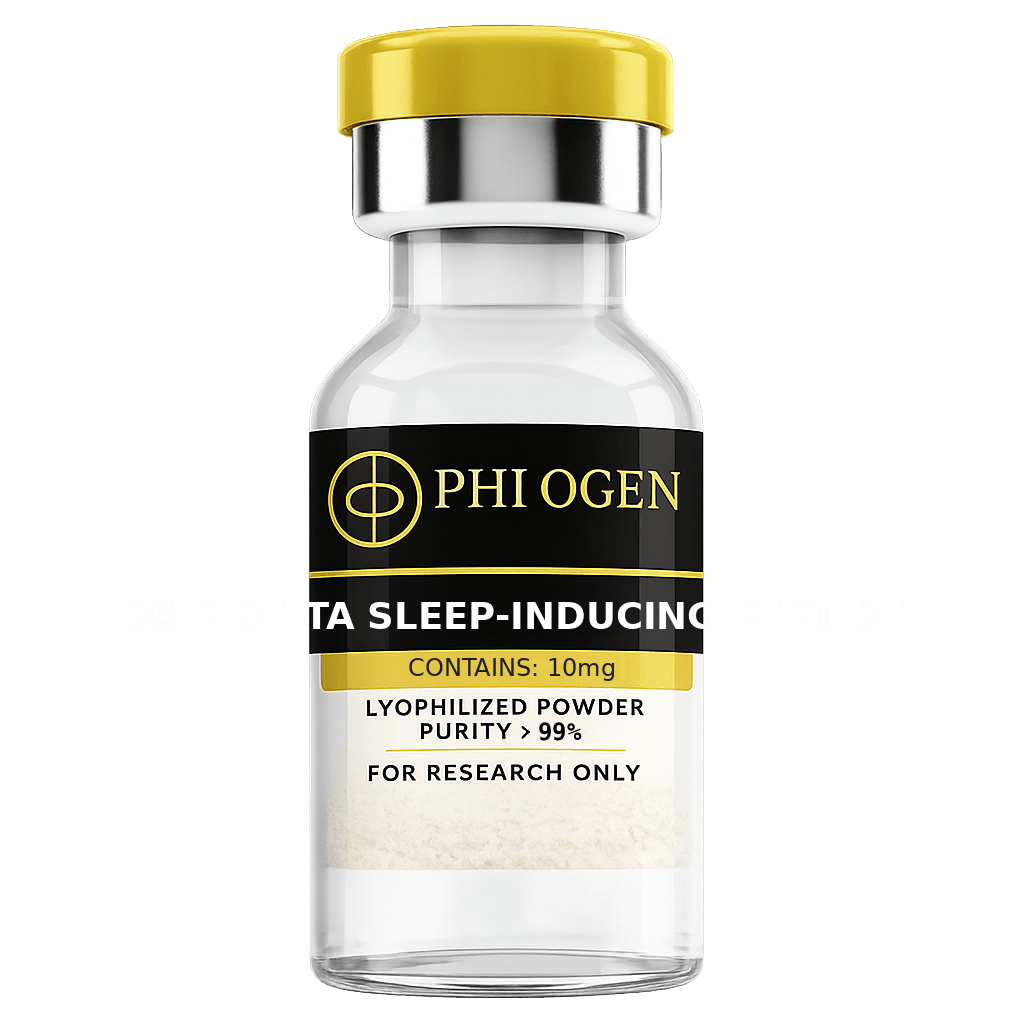
DSIP 10mg
Nootropic research compound for cognitive studies.
DSIP (Delta Sleep-Inducing Peptide) is a nine-amino-acid peptide first isolated from cerebral venous blood of sleeping rabbits in the 1970s. It is primarily studied in sleep-architecture, stress-response, and neuroendocrine-modulation research.
Proposed mechanism
DSIP has been reported to modulate delta-wave EEG activity, stress-axis signaling, and certain neuroendocrine parameters. Its exact receptor target remains an open question in the research literature — a rare case of a well-studied peptide without a definitively identified receptor.
Research highlights
- Nine-amino-acid peptide first isolated in 1977
- Studied in sleep, stress, and neuroendocrine research
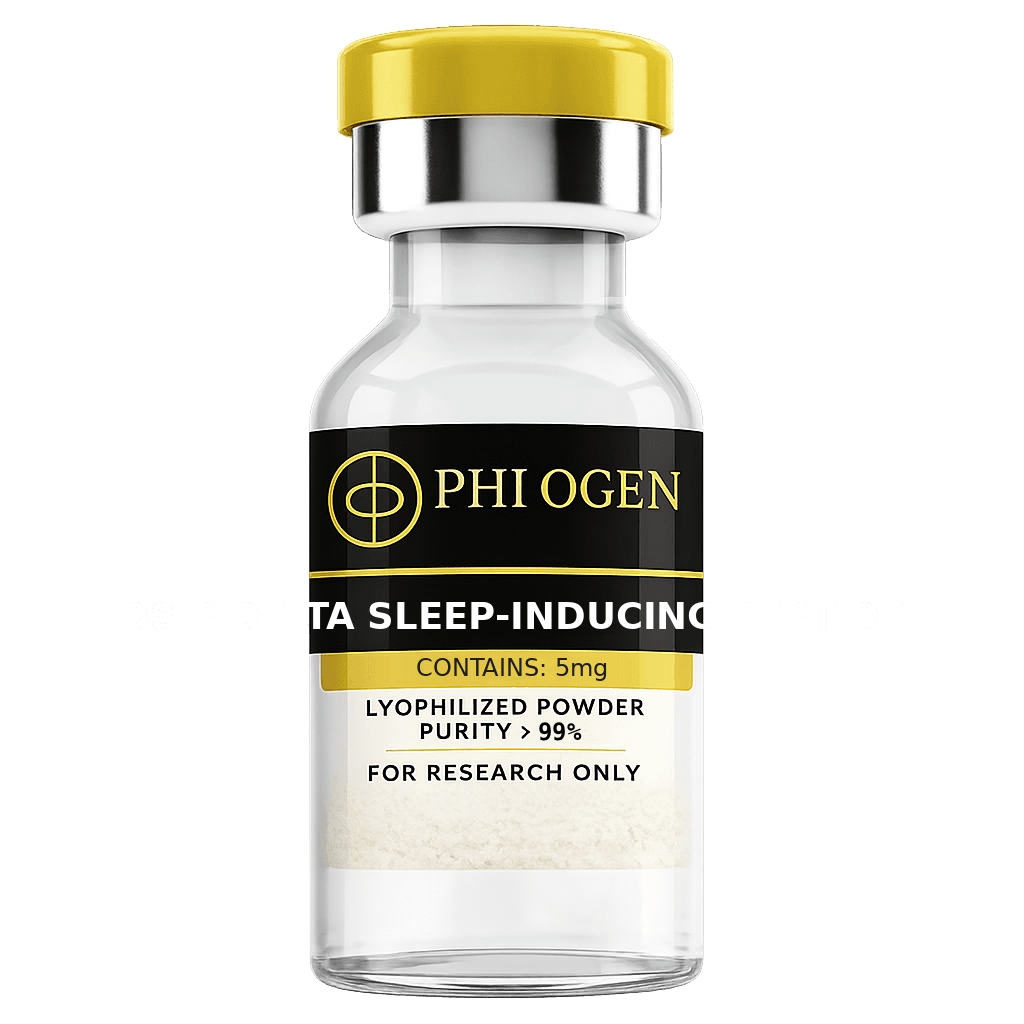
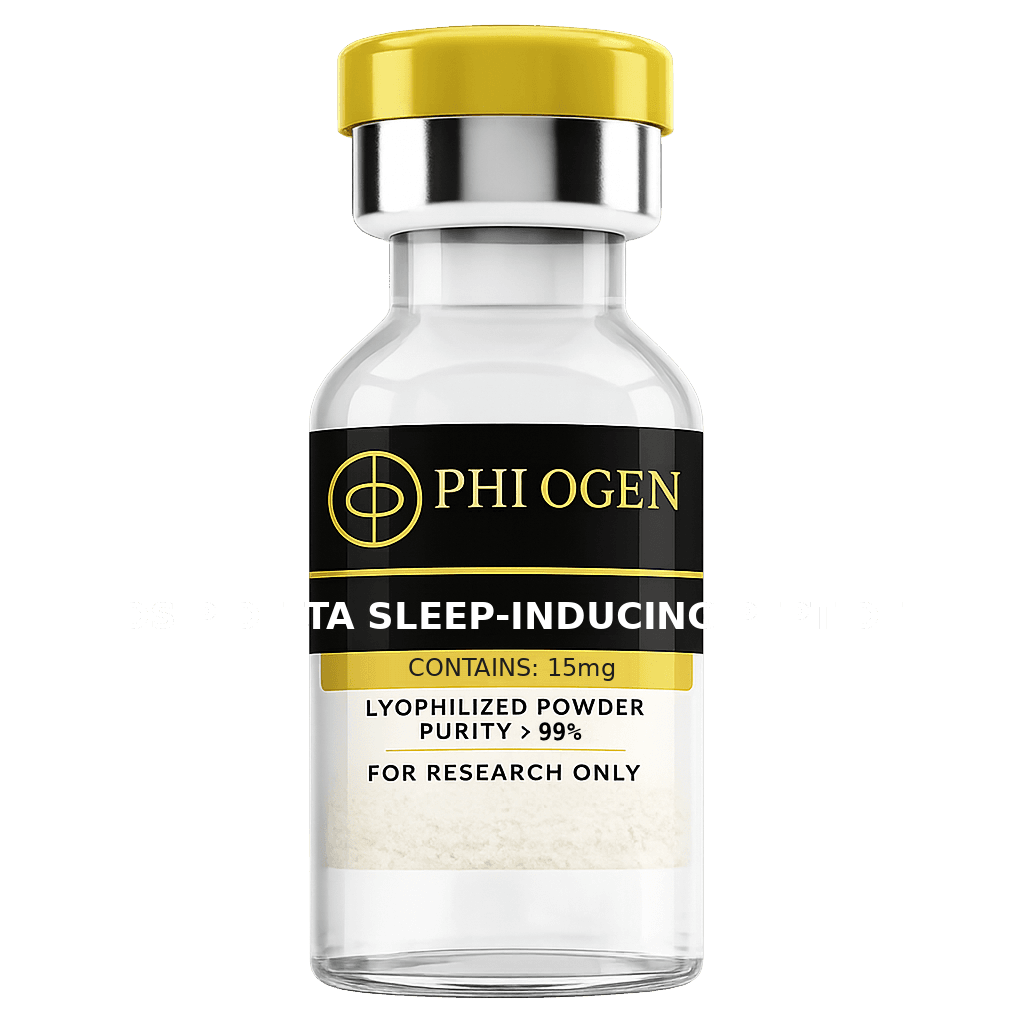
- Available in 5, 10, and 15 mg research vials
- Receptor target remains an active research question
Research protocol notes
Reconstitute under sterile technique with bacteriostatic water. Typical volumes range from 1–3 mL depending on the target working concentration. Swirl gently — do not shake — to avoid peptide shearing.
Stacking and comparative studies
Typically studied alone in sleep-research designs.
Handling and storage
Lyophilized powder is stable at ambient shipping temperatures. Once reconstituted with bacteriostatic water, store at 2–8 °C and use within 28 days. For long-term storage of unreconstituted vials, freeze at −20 °C and protect from light.
Frequently asked
Does DSIP have a known receptor?
Despite decades of study, a specific DSIP receptor has not been definitively identified — an unusual situation for such a well-characterized peptide.
What EEG endpoints have been studied?
Delta-wave activity modulation — the namesake of the peptide.
Why multiple vial sizes?
Protocol concentration and duration vary — 5 mg for short pilots, 15 mg for longer research windows.
Is it widely used in current research?
Less than in the 1980s–90s peak, but still a documented entry in sleep-peptide research.