
Peptides for Muscle Growth and Recovery
The muscle-growth peptide conversation splits cleanly in two: compounds that amplify the growth-hormone axis, and compounds that accelerate soft-tissue recovery between training. The best-documented stacks combine one from each lane.
The growth-hormone axis: two receptors, two peptide classes
Growth hormone release from the pituitary is regulated by two separate receptor systems. GHRH analogs activate the GHRH receptor. GHRPs (growth-hormone-releasing peptides) activate the ghrelin receptor. Because these are two distinct pathways, activating both at once produces a larger GH pulse than either alone. This is the mechanistic reason behind the canonical "GHRP + GHRH" stack design.
The GHRP side: ipamorelin, GHRP-2, GHRP-6, hexarelin
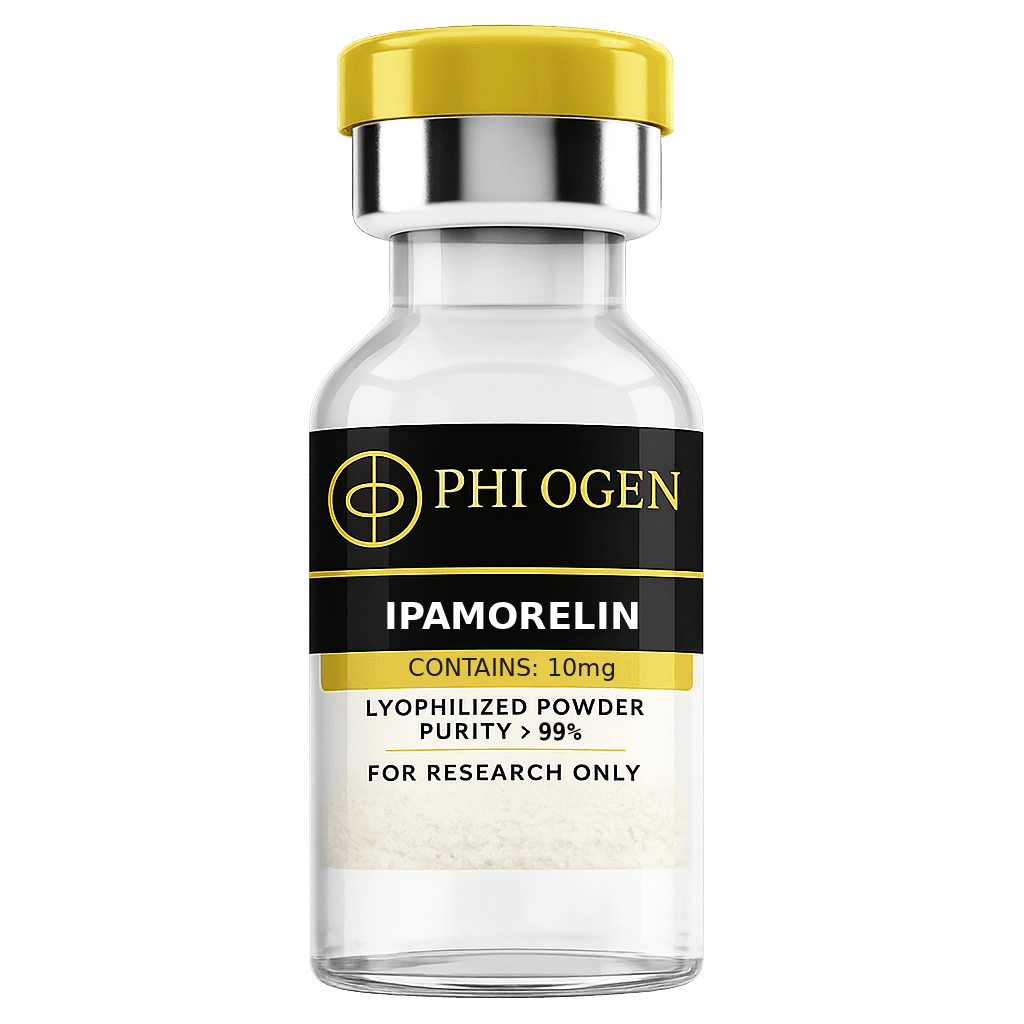
Ipamorelin
The most selective of the group. Research reports strong GH release with minimal cortisol or prolactin impact — this is the "clean" reputation ipamorelin carries in comparative studies. Short half-life (~2 hours) supports pulsed dosing.
GHRP-2
Older, still potent. More HPA-axis engagement than ipamorelin — cortisol and prolactin elevation are noticeable at research doses. Benchmark compound in the literature.
GHRP-6
Strongest appetite-stimulation profile in the class — useful if hunger is an endpoint, counterproductive if it isn't.
Hexarelin
Most potent per-mg and the only GHRP with well-documented direct cardiac-tissue effects. More HPA-axis impact than ipamorelin.
The GHRH side: CJC-1295, tesamorelin, sermorelin
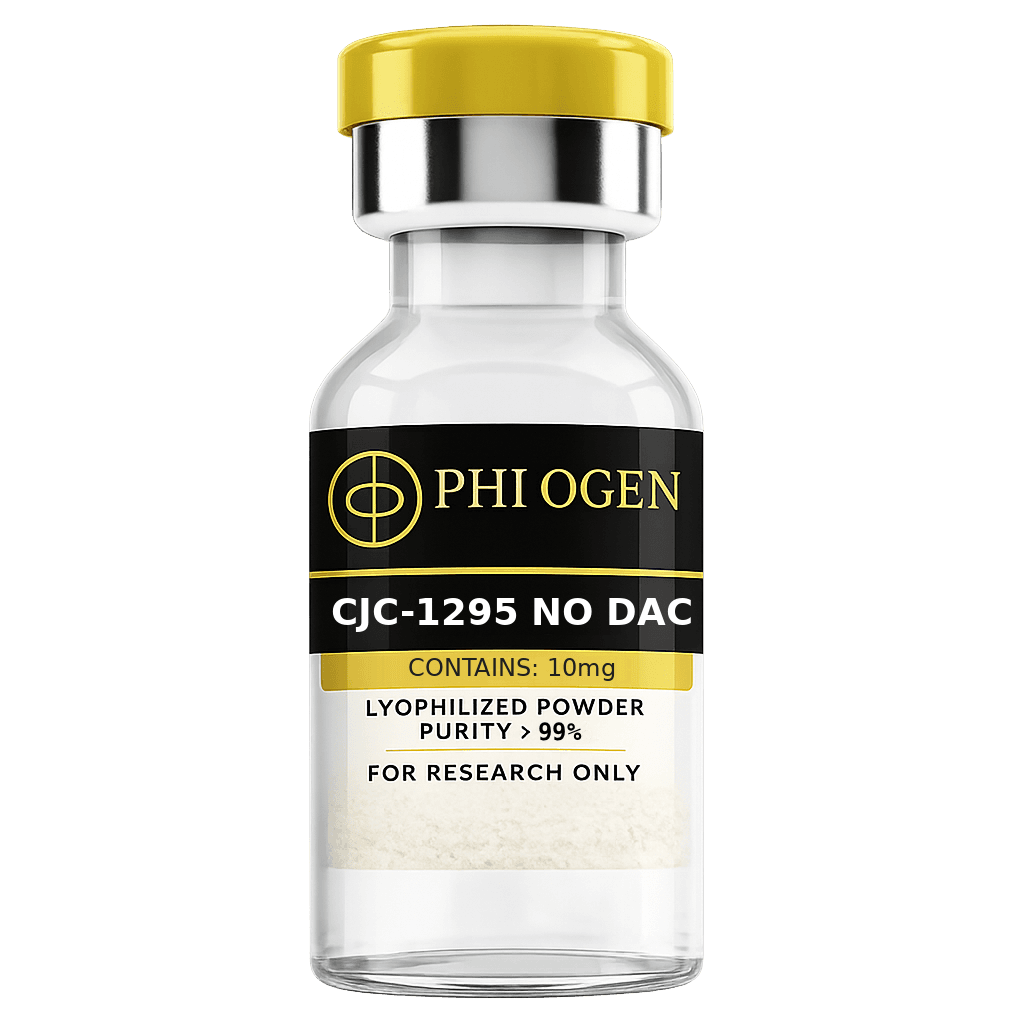
CJC-1295 (No DAC and with DAC)
GHRH (1-29) analog. The "No DAC" version has a half-life in hours — suited to multi-daily pulsed protocols. The "with DAC" version includes an albumin-binding modification that extends half-life to days, for sustained-level research.
Tesamorelin
Stabilized GHRH (1-44) analog — closer to native GHRH than CJC-1295. Daily-dose research profile, well documented in visceral-adiposity models.
Sermorelin
GHRH (1-29) without stabilizing modifications. Shortest half-life of the three, which some researchers prefer because it better mimics natural GHRH pulsatility.
The canonical stack: ipamorelin + CJC-1295
This is the combination that dominates the growth-axis research literature. Ipamorelin drives the ghrelin-receptor pulse, CJC-1295 drives the GHRH receptor pulse, and timing them together produces stronger GH release than either alone. Pre-blended vials are available so you don't need to reconstitute two vials separately.
IGF-1 LR3: direct downstream
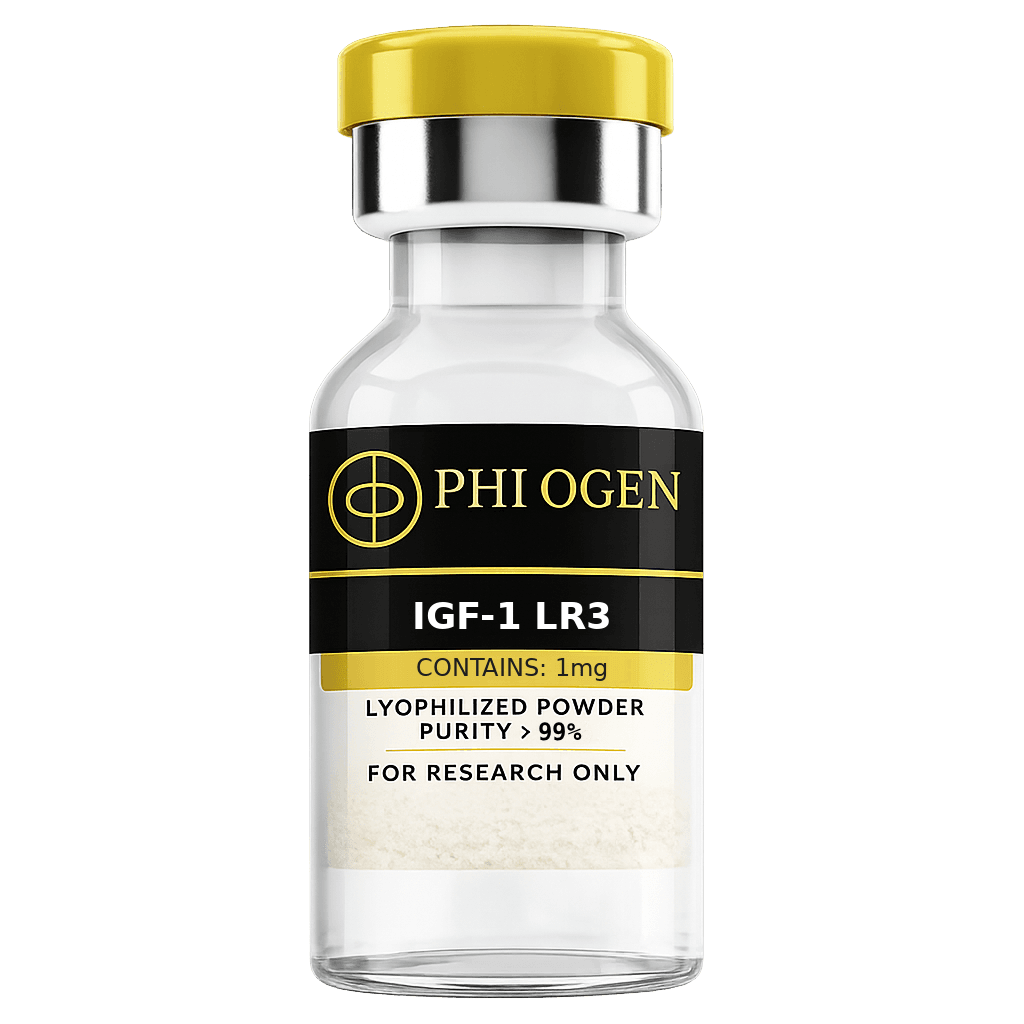
GH from the pituitary signals the liver to produce IGF-1, which drives many of the anabolic effects attributed to the growth axis. IGF-1 LR3 is a modified IGF-1 variant with a longer half-life, letting researchers study IGF-1 signaling directly without going through the GH axis. Smaller vial (1 mg) because the working doses are lower.
Repair peptides: BPC-157 and TB-500
Training creates microtrauma; recovery sets the pace of progress. BPC-157 and TB-500 are the two most-studied repair peptides and show up in virtually every serious training-peptide protocol.
BPC-157
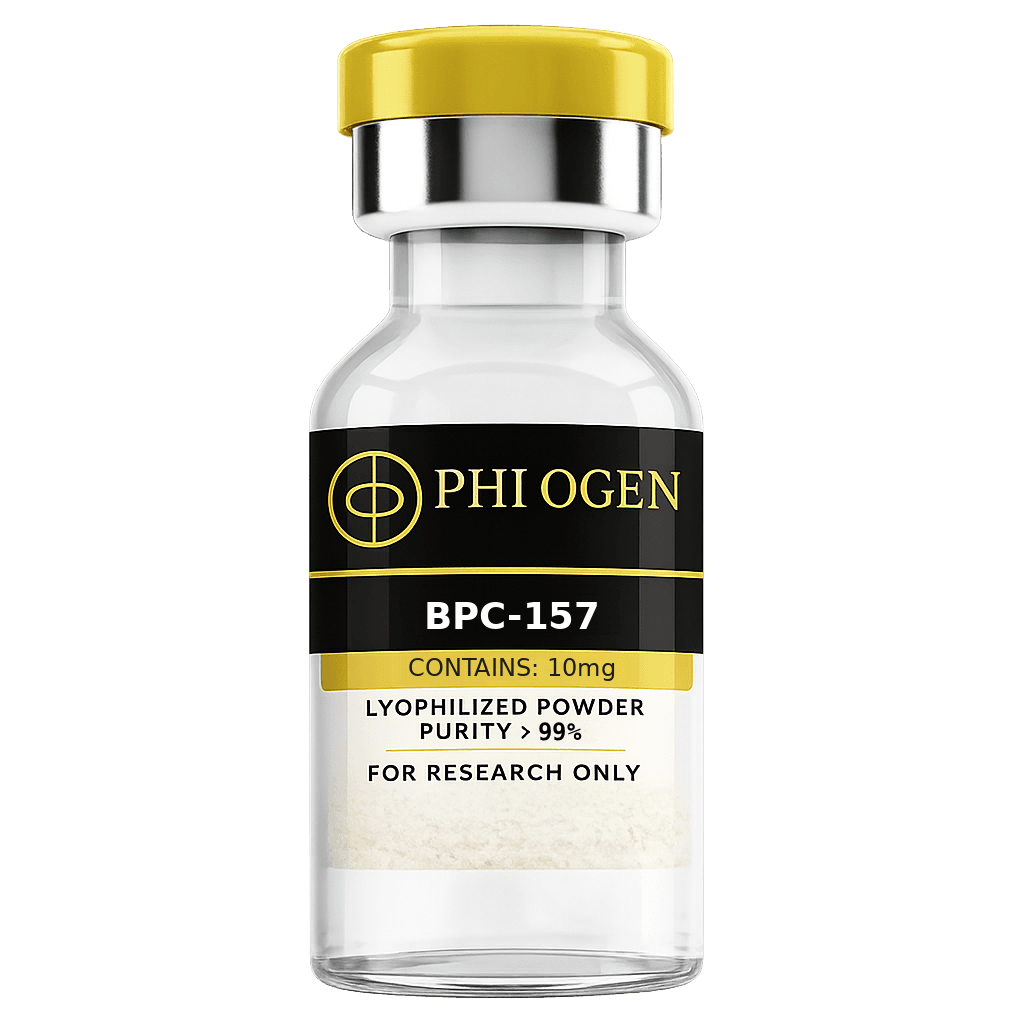
Drives angiogenesis at injury sites via the VEGFR2 pathway. Enormous rodent-model literature covering tendon, ligament, muscle, and gut tissue. Unusual among peptides for being orally stable.
TB-500
Fragment of Thymosin Beta-4. Promotes cellular migration via actin sequestration. Reported half-life is unusually long for a research peptide (days, not hours).
The combined repair blend
Pre-blended BPC-157 + TB-500 vials (10 mg and 20 mg total mass) are the standard way to run combined-repair research. Different arms of the repair pathway, co-lyophilized.
MOTS-c and mitochondrial support
MOTS-c is a mitochondrial-derived peptide studied in exercise-response and insulin-sensitivity research. Included here because it shows up in some serious performance-oriented stacks alongside SS-31 (cardiolipin-binding, mitochondrial membrane support) and NAD+ (sirtuin substrate).
Putting it together
- Core growth-axis stack — Ipamorelin + CJC-1295 blend.
- Add direct IGF-1 signaling — IGF-1 LR3.
- Repair foundation — BPC-157 + TB-500 blend.
- Mitochondrial support — MOTS-c, optionally SS-31 or NAD+.
Research-use notice
Every vial on Tidemaxxing is sold for laboratory research only. Nothing on this page is training or medical advice.
Featured compounds
Related reading
Every compound referenced on this page is indexed in the catalogue with per-batch COAs and direct purchase links.
Open the catalogue →