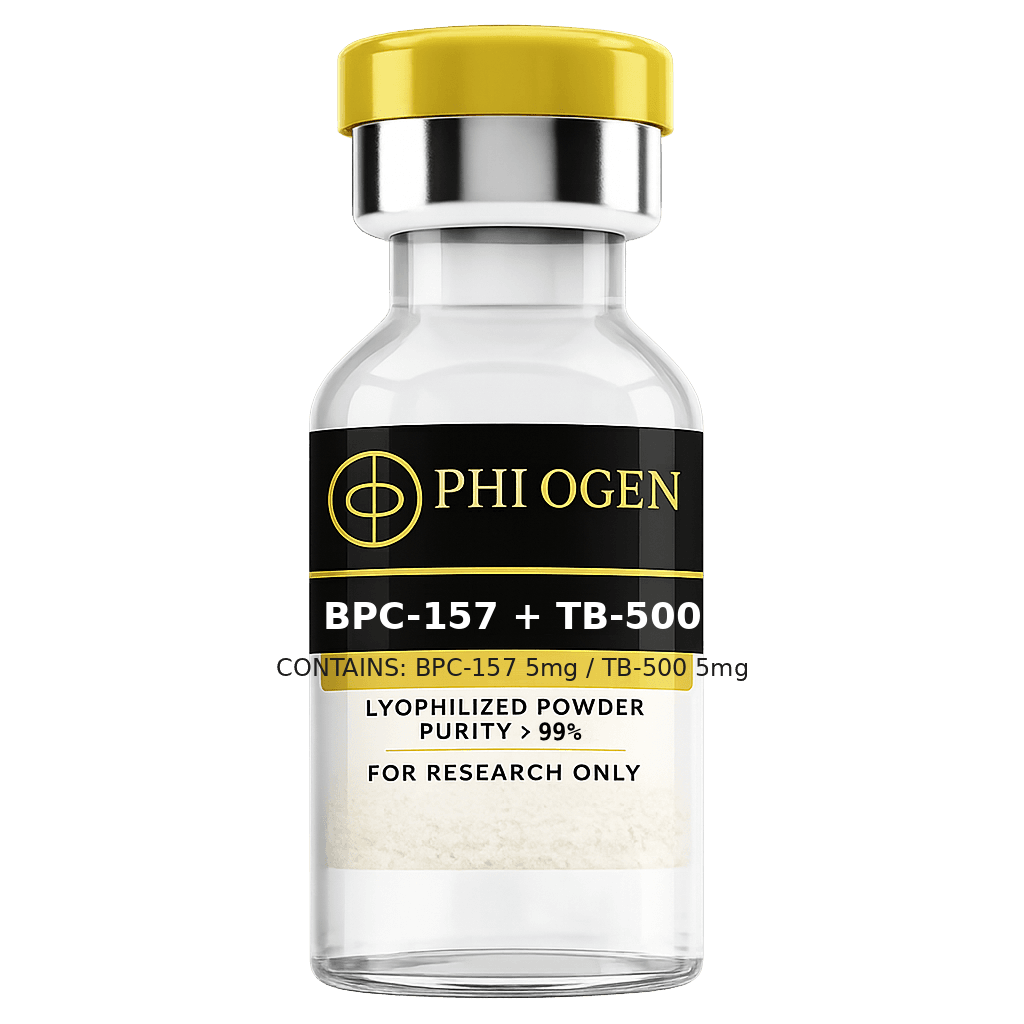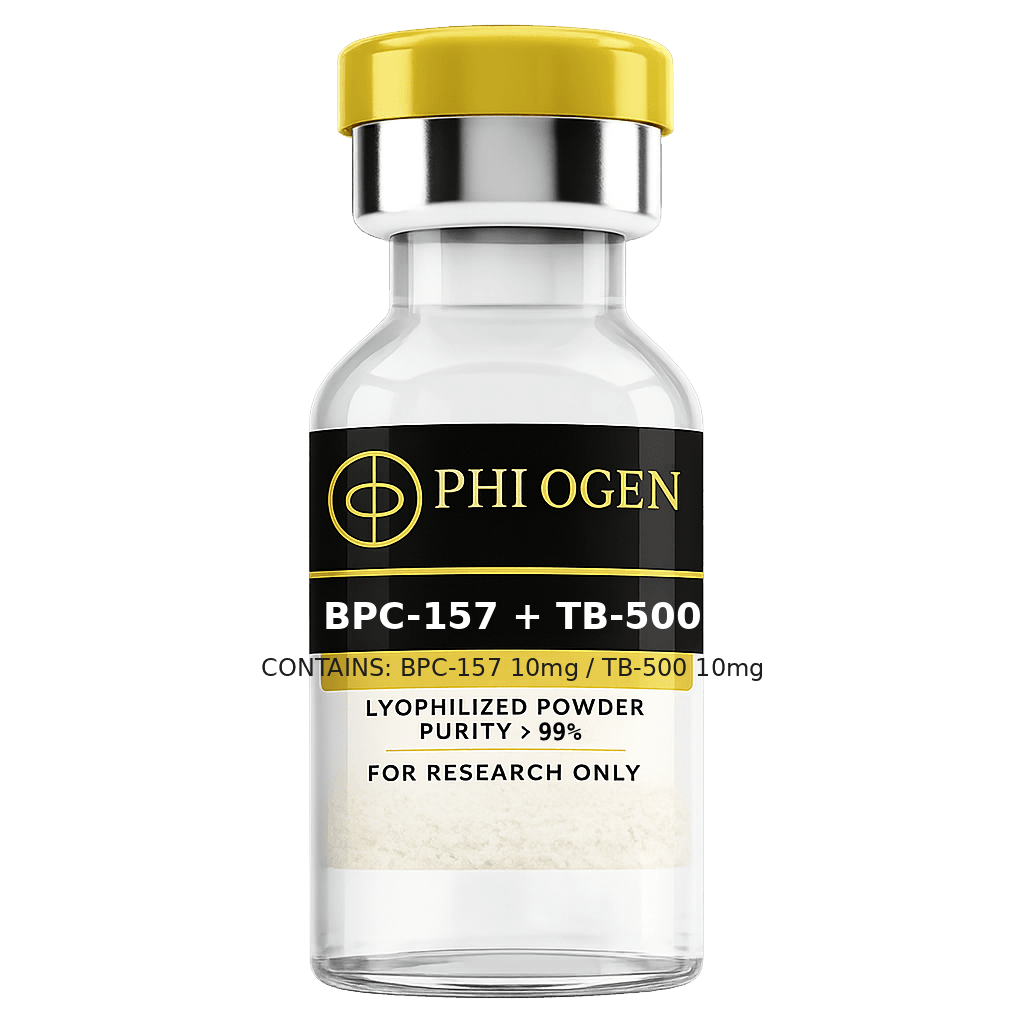
BPC-157 + TB-500 Blend 20mg
Pre-blended stack for comparative research work.
Pre-blended BPC-157 + TB-500 research stack — the canonical soft-tissue repair combination co-lyophilized in a single vial. Reduces reconstitution steps in multi-peptide research designs.
Proposed mechanism
BPC-157 drives angiogenic signaling via the VEGFR2 pathway; TB-500 promotes cellular migration via actin sequestration. The two peptides target complementary arms of the tissue-repair response, which is why the blend is a research standard.
Research highlights
- Co-lyophilized BPC-157 + TB-500
- Single-reconstitution convenience for combined research
- Each component COA-verified per lot
- Available in 10 mg and 20 mg total-mass formats
Research protocol notes
Reconstitute the full vial at once per standard peptide technique. Aliquot if the research design calls for extended protocols.
Stacking and comparative studies
This is the stack — no further combination typically.
Handling and storage
Lyophilized powder is stable at ambient shipping temperatures. Once reconstituted with bacteriostatic water, store at 2–8 °C and use within 28 days. For long-term storage of unreconstituted vials, freeze at −20 °C and protect from light.
Frequently asked
Why choose the blend over separate vials?
One reconstitution step, one injection volume, cleaner research logistics. The per-component mass is fixed at the blend ratio — you cannot adjust the ratio independently with a pre-blend.
What is the component ratio?
The 20 mg format is 10 mg BPC-157 + 10 mg TB-500. The 10 mg format is 5 mg + 5 mg. Ratios are 1:1 in both formats.
Can both components be assayed?
Yes — per-lot COAs include identity and purity data for each component.
How is it reconstituted?
Single-vial reconstitution with BAC water — no different from reconstituting a single peptide.