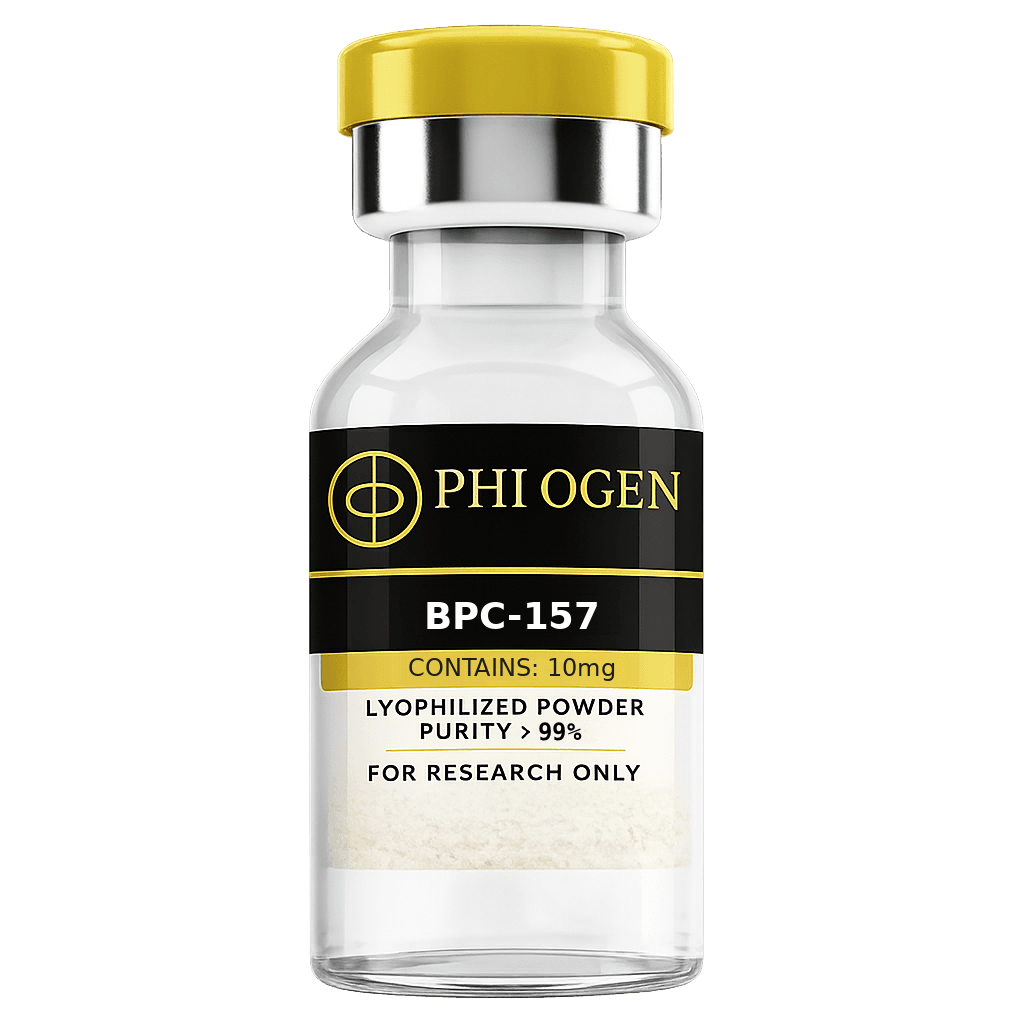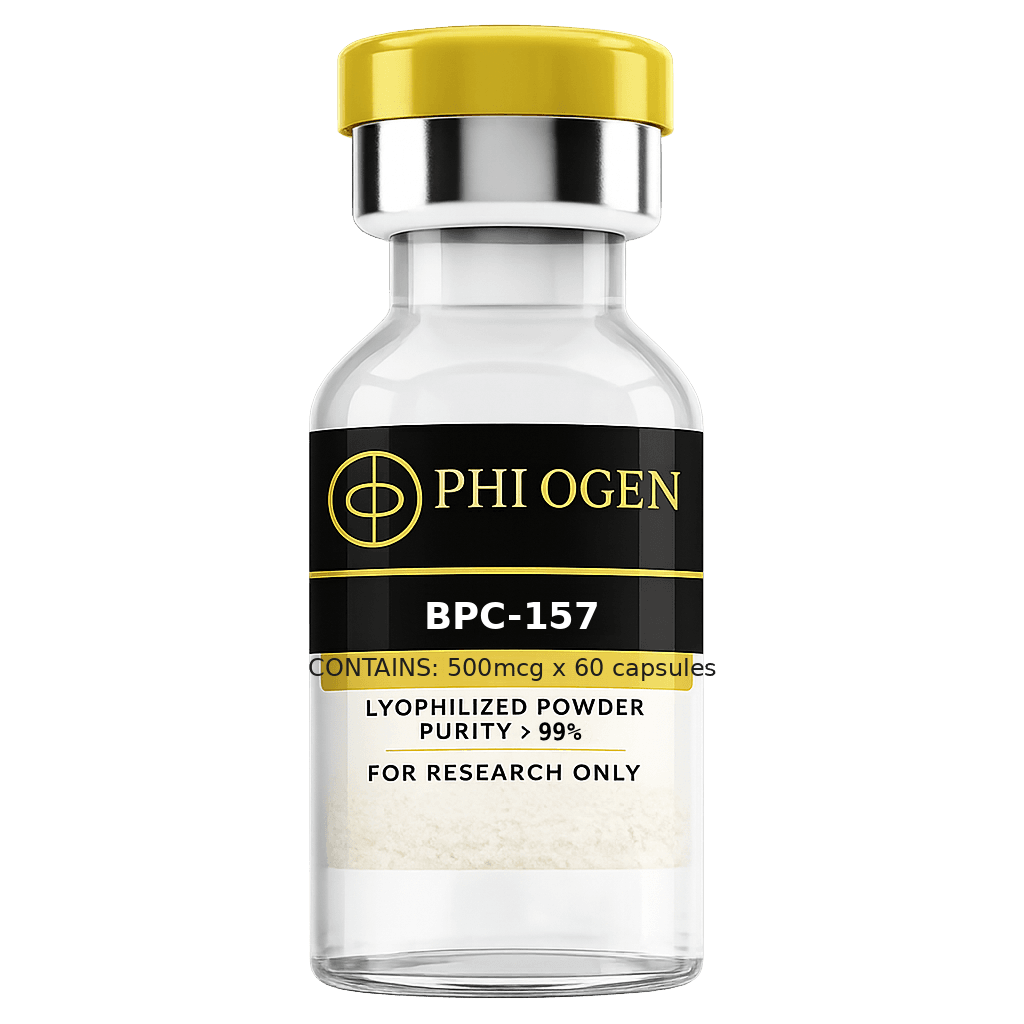
BPC-157 Capsules 500mcg x60
Investigational support for tissue-repair research.
BPC-157 (Body Protection Compound-157) is a synthetic pentadecapeptide derived from a protective protein found in gastric juice. It has been one of the most widely studied peptides in pre-clinical repair and soft-tissue research over the past two decades, with a literature record spanning tendon, ligament, gut, and vascular models.
Proposed mechanism
Research describes BPC-157 acting on the VEGFR2 pathway, promoting angiogenesis at the site of injury. It also modulates the nitric oxide (NO) system and has been shown in rodent models to upregulate growth-hormone receptor expression in injured tissue — a proposed explanation for its observed tendon-to-bone healing effects.
Research highlights
- Studied across tendon, ligament, muscle, and gut-lining models
- Stable in gastric juice — one of few peptides robust to pH extremes in vitro
- Examined in both systemic (injectable) and local-application research protocols
- Research literature spans 1990s to present, largely from Seiwerth/Sikiric labs in Zagreb
Research protocol notes
In rodent studies, systemic doses are commonly reported in the 10–20 µg/kg range. Researchers typically reconstitute 10 mg vials in 2 mL of bacteriostatic water to yield 5 mg/mL working stock. Peptide integrity is sensitive to repeated freeze-thaw cycles — aliquot where possible.
Stacking and comparative studies
In comparative research, BPC-157 is frequently studied alongside TB-500 (Thymosin Beta-4). The two are thought to act on complementary repair pathways — BPC-157 on vascular/angiogenic signaling, TB-500 on cell migration via actin sequestration. Pre-blended stacks are offered for convenience.
Handling and storage
Lyophilized powder is stable at ambient shipping temperatures. Once reconstituted with bacteriostatic water, store at 2–8 °C and use within 28 days. For long-term storage of unreconstituted vials, freeze at −20 °C and protect from light.
Frequently asked
What does BPC-157 stand for?
Body Protection Compound-157 — a 15-amino-acid fragment of a larger protein isolated from human gastric juice.
Is BPC-157 stable when taken orally in research?
Unusually for a peptide, yes — research shows BPC-157 retains biological activity after exposure to gastric pH, which is why both oral-gavage and injected routes appear in the literature.
How does BPC-157 compare to TB-500 in repair research?
The two are complementary in published models. BPC-157 is angiogenic (new vessel formation); TB-500 promotes cellular migration. Stacks combining both are common in comparative repair studies.
What is a certificate of analysis and is one included?
A COA is an independent lab report confirming identity and purity (typically by HPLC and mass spectrometry). Every lot ships with a matching COA — request it from the supplier if it is not linked on the product page.