
Peptides for Skin, Hair, and Anti-Aging
Cosmetic peptide research has a much longer history than most people assume. GHK-Cu appeared in the dermatology literature in the 1970s. Here's what the current catalogue of skin-and-aging peptides actually covers and how the formats differ.
GHK-Cu: the copper peptide
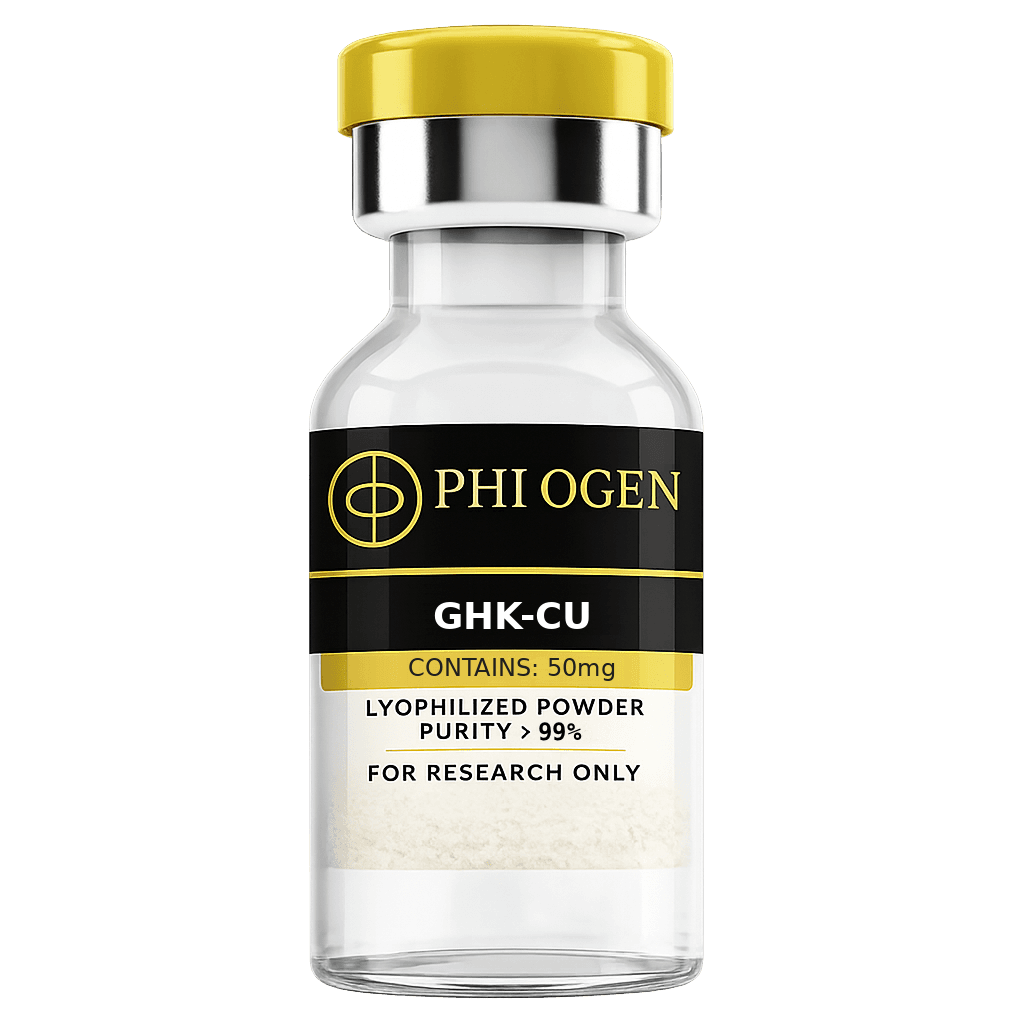
GHK-Cu is the backbone of cosmetic-peptide research. It's a naturally occurring tripeptide (glycyl-histidyl-lysine) that binds copper ions to form the biologically active complex. Research describes it upregulating collagen, elastin, decorin, and glycosaminoglycans — the structural proteins and polysaccharides that keep skin firm and hydrated.
- 50 mg — standard research vial. Suits both injectable and topical protocols.
- 100 mg — same compound, larger vial for extended research.
Research protocols span injected (subcutaneous) and topical formulations. Topical is the dominant cosmetic application; injected routes appear in wound-healing and systemic anti-aging research.
Epitalon: telomerase and circadian research
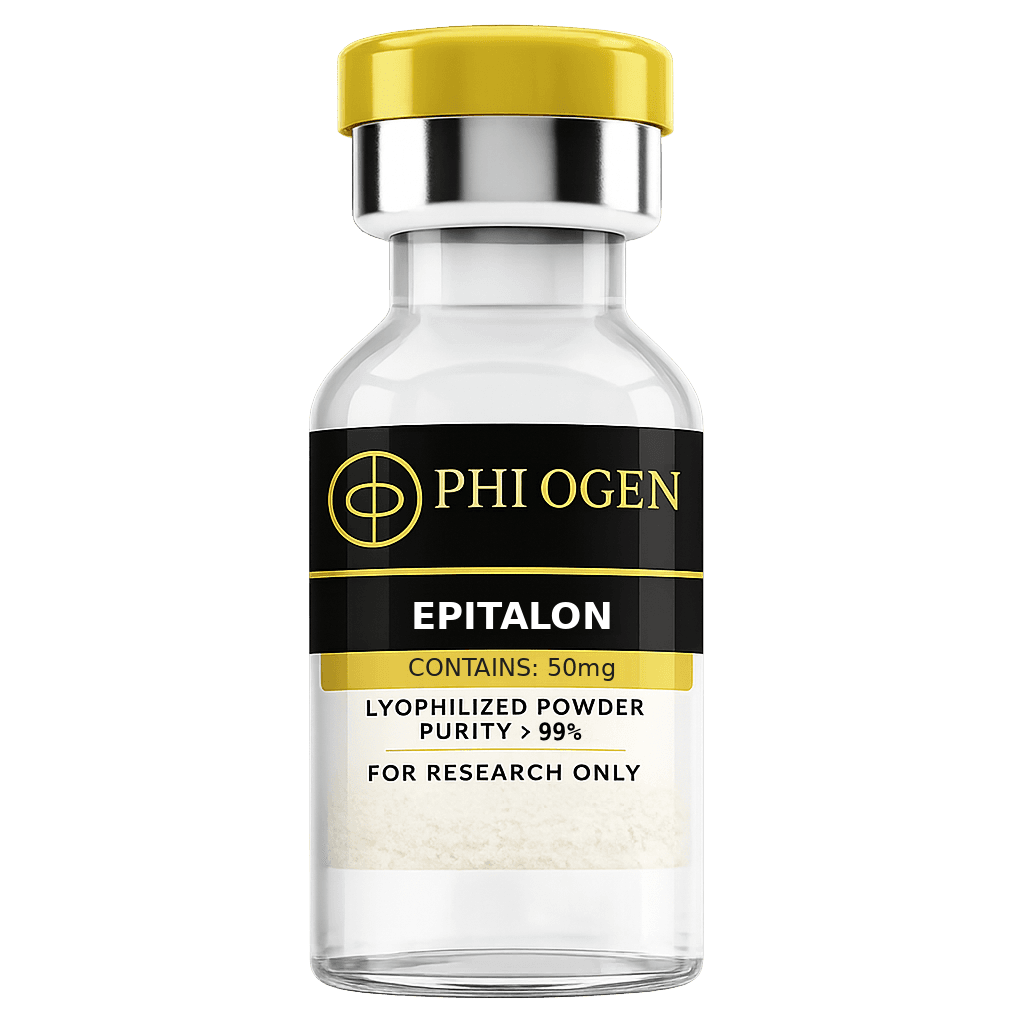
Epitalon (ala-glu-asp-gly) is a synthetic tetrapeptide developed in the Russian research tradition, studied for telomerase activation and pineal-axis regulation. Research protocols typically use short pulsed courses (10–20 days) rather than continuous dosing. Available in 10 mg and 50 mg vials.
NA-Epitalon is the N-acetylated version — improved stability for longer protocols.
GLOW and KLOW blends
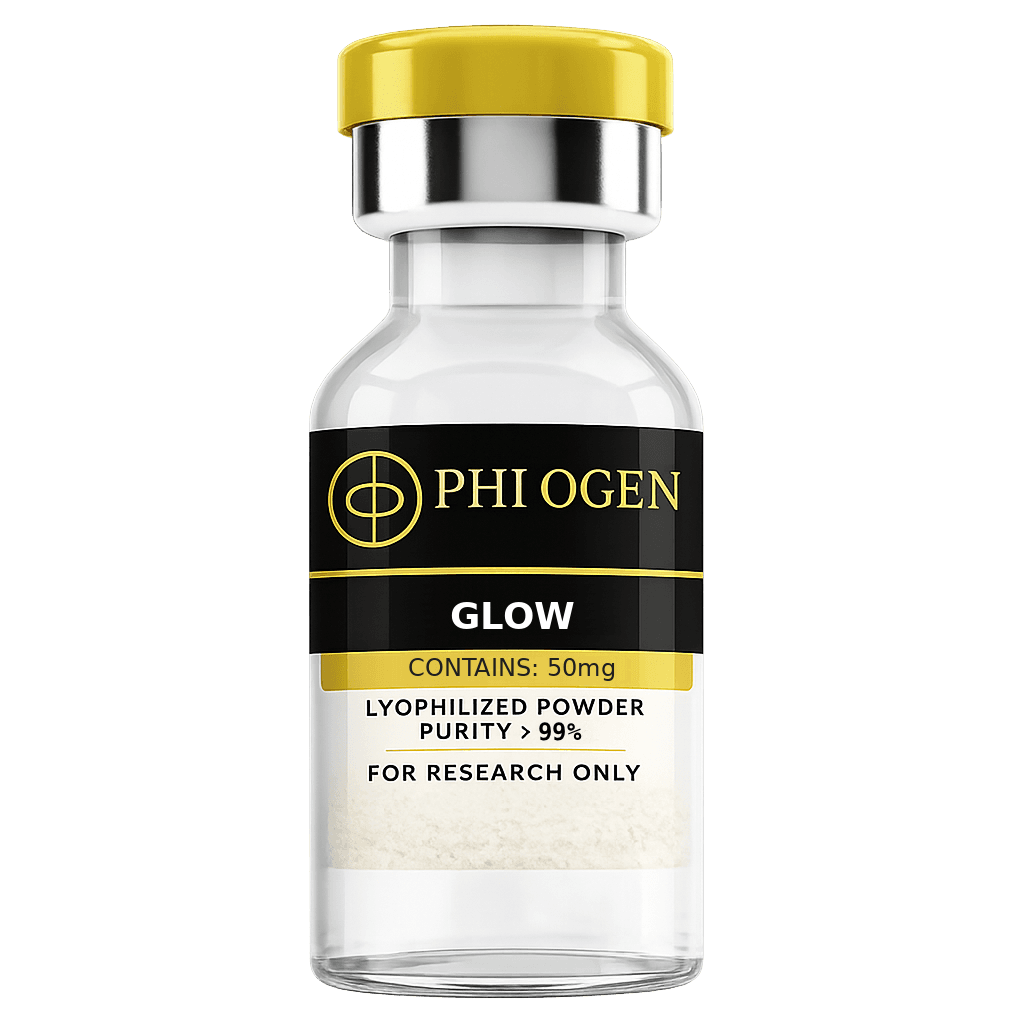
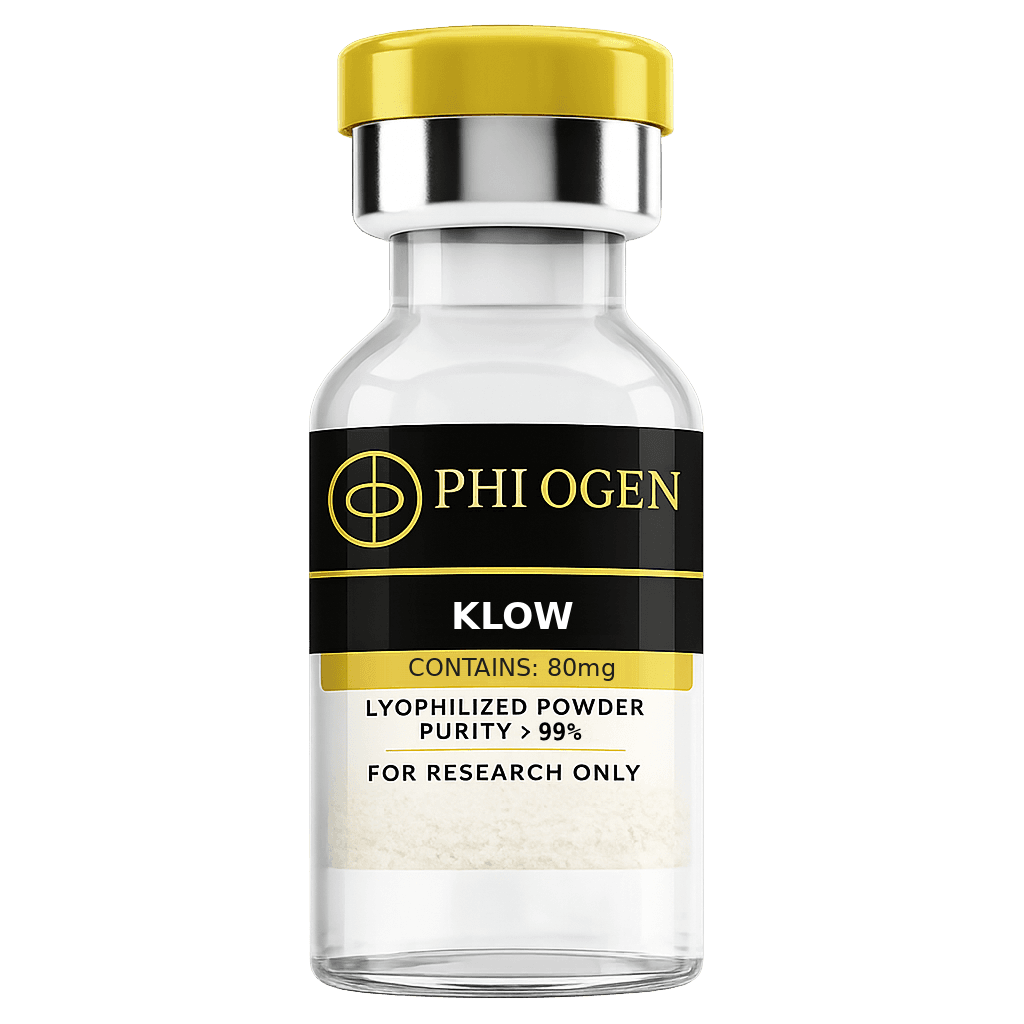
Pre-mixed multi-peptide blends built around GHK-Cu plus repair peptides. The idea is to hit collagen synthesis (GHK-Cu), vascular / repair signaling (BPC-157), and cellular migration (TB-500) all at once. KLOW extends GLOW by adding KPV — the α-MSH tripeptide that delivers anti-inflammatory activity without MC1R pigmentation effects.
- GLOW 50 mg / 70 mg — collagen + repair blend.
- KLOW 80 mg — collagen + repair + anti-inflammatory.
Melanotan I and II
α-MSH analogs. Melanotan I (afamelanotide) is more MC1R-selective — pigmentation with a narrower endpoint profile. Melanotan II is broader-spectrum (MC1R, MC3R, MC4R, MC5R) — faster pigmentation but wider downstream effects including appetite and central sexual-response circuits.
RU-58841: topical hair research
Not a peptide — a topical anti-androgen studied in hair-follicle research. Binds androgen receptors locally without systemic absorption at typical research concentrations. Available as 50 mg in 30 mL and 60 mL solution formats.
Supporting compounds for skin research
Glutathione
The major intracellular antioxidant tripeptide. Injected glutathione research focuses on tissue GSH elevation — which downstream connects to skin brightness, redox balance, and detoxification endpoints. Available in 200, 600, and 1500 mg vials.
Methylene Blue
A phenothiazine-derived compound (not a peptide) studied in mitochondrial and redox-biology research. Shows up in longevity stacks alongside NAD+.
FOXO4-DRI
A senolytic peptide designed to disrupt the FOXO4-p53 interaction that protects senescent cells from apoptosis. Specialty longevity-research compound.
Which format: injectable or topical?
For cosmetic GHK-Cu research, topical formulations dominate published protocols because skin is the target tissue. Systemic (injected) GHK-Cu appears in wound-healing and broader anti-aging research. Most research-grade suppliers sell the same lyophilized vial — researchers reconstitute into whichever vehicle their study requires.
A typical starting stack
- GHK-Cu 50 mg — anchor compound.
- BPC-157 10 mg — repair support (also useful for training recovery).
- Optional: GLOW or KLOW — if you want the multi-peptide blend rather than DIY.
Add Epitalon as a longevity-axis adjunct if the protocol calls for pulsed bioregulator research. Melanotan compounds add pigmentation — a separate research axis.
Storage and handling
All peptides ship lyophilized. Reconstitute with bacteriostatic water. Store reconstituted vials at 2–8 °C and use within ~28 days. Freeze unreconstituted vials for long-term stability.
Research-use notice
Compounds on Tidemaxxing are for laboratory research only. Nothing on this page is medical or cosmetic advice.
Featured compounds
Related reading
Every compound referenced on this page is indexed in the catalogue with per-batch COAs and direct purchase links.
Open the catalogue →