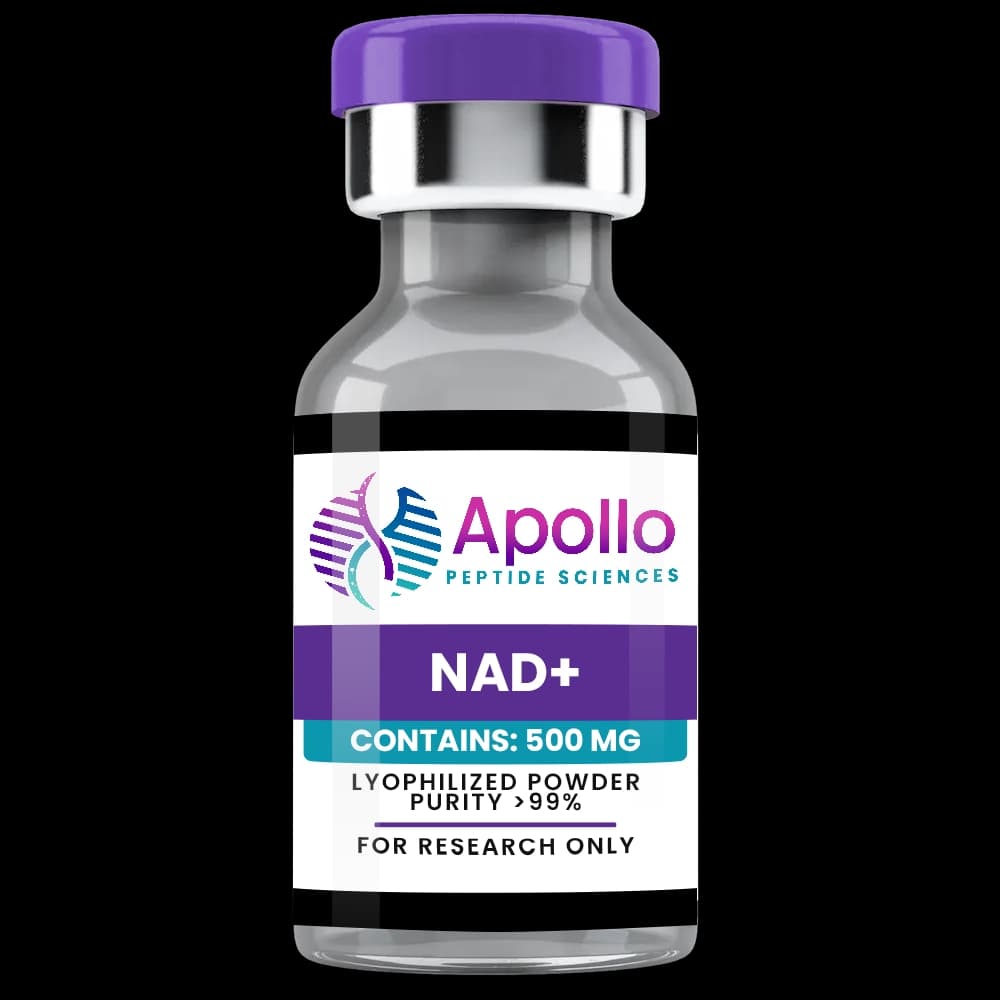
NAD+ 500mg
Nicotinamide adenine dinucleotide — cellular energy and longevity cofactor.
The Science of NAD+
Across senescence and longevity models, NAD+ is a critical coenzyme in cellular metabolism, DNA repair, and sirtuin activation. Supplementation is studied for mitochondrial function, cognitive support, and age-related NAD+ decline.
Primary research applications for NAD+ include cellular energy metabolism, dna repair support, mitochondrial function, longevity research. As a Anti-Aging compound, it is studied in the context of anti-aging, longevity, nad+ — areas where its mechanism of action has the most direct relevance in preclinical models.
In standard research protocols, NAD+ is administered at 250–500 mg subcutaneous or IV per protocol, with a half-life of Hours. This product is supplied by Apollo Peptide Sciences as lyophilized powder with independent third-party Certificate of Analysis (COA) documentation confirming 99%+ purity and correct molecular identity on every batch. NAD+ 500mg is sold strictly for laboratory and educational use only — it is not FDA-approved for human therapeutic use and is not intended for human consumption, clinical application, or use in animals.
Applications & Benefits
Effect Timeline
Expected milestones based on published preclinical data.
Collagen gene upregulation begins. Cellular repair mechanisms activate; antioxidant enzymes increase.
Measurable improvements in extracellular matrix markers. Early skin and tissue quality improvements.
Skin texture and elasticity improvements in preclinical models. Collagen density increasing measurably.
Sustained telomere/collagen/structural benefits. Anti-aging mechanisms operating at full capacity.
Collagen gene upregulation begins. Cellular repair mechanisms activate; antioxidant enzymes increase.
Measurable improvements in extracellular matrix markers. Early skin and tissue quality improvements.
Skin texture and elasticity improvements in preclinical models. Collagen density increasing measurably.
Sustained telomere/collagen/structural benefits. Anti-aging mechanisms operating at full capacity.
Timelines are derived from preclinical animal studies. Individual results in laboratory settings may vary. For educational purposes only.
Reconstitution Calculator
Calculate exact BAC water volume and dose measurements for NAD+ 500mg.
For laboratory use only. This calculator is a reference tool — verify all calculations before use. Always use sterile technique with bacteriostatic water and sterile syringes.
Effectiveness Profile
Relative effectiveness scores derived from published preclinical literature across key endpoints.
Scores are qualitative aggregates from animal and in vitro studies and are not a medical claim. For educational purposes only.
What to Expect — Visible Timeline
Earliest subjective changes — often better sleep, improved energy, minor reduction in visible inflammation.
Skin texture begins to shift. Fine-line depth starts to decrease in peri-orbital and forehead regions.
Visible firmness improvement. Collagen remodeling produces measurable change in dermal density on ultrasound imaging in research settings.
Pigmentation evens out. Hair and nail quality improvements become apparent alongside continued skin-quality gains.
Peak visible results. This is the window most research protocols target for before/after assessment and biomarker re-testing.
Related Topics
NAD+
For educational use only · Verified vendor